
Agathirsia
Westwood, 1882
Species Guides
2Agathirsia is a of parasitic in the Braconidae ( Agathidinae). exhibit interspecific variation in mouthpart length, with lengths ranging from short to elongated. wasps visit flowers for resources, and mouthpart length influences feeding and floral visitation patterns. Pollen analysis indicates that species with elongated mouthparts access similar nectar sources regardless of tongue length, while short-tongued species show distinct floral associations.
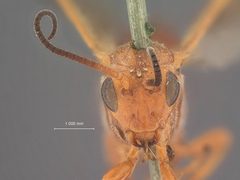
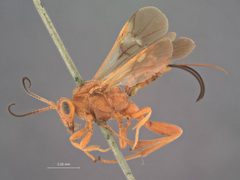
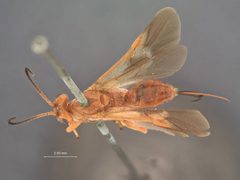
Pronunciation
How to pronounce Agathirsia: /əˈɡæθɪrsiə/
These audio files are automatically generated. While they are not always 100% accurate, they are a good starting point.
Identification
Members of Agathirsia can be distinguished from related braconid by features typical of the Agathidinae. Interspecific identification may be facilitated by length, which varies from short to long across . Males and females display similar mouthpart and floral visitation patterns.
Images
Diet
feed on floral nectar. Pollen analysis of museum specimens indicates common visitation to Asteraceae . Mouthpart length correlates with feeding rather than nectar access depth.
Behavior
engage in floral visitation to obtain energy. with elongated mouthparts demonstrate increased feeding at flowers. Both sexes exhibit overlap in common nectar sources and similar pollen richness. Medium-length mouthpart species show higher pollen richness than short-tongued species, though this may be confounded by body size.
Ecological Role
function as floral visitors, potentially contributing to pollination while obtaining nectar resources. As , larvae presumably develop as parasitoids of insects, though specific host relationships remain undocumented in available sources.
Similar Taxa
- Other Agathidinae generaAgathirsia shares characteristics with other Agathidinae, but is distinguished by documented interspecific mouthpart length variation and associated floral visitation patterns.