
Dufourea novaeangliae
(Robertson, 1897)
Pickerelweed Shortface
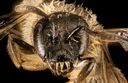
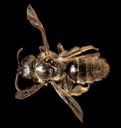
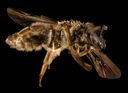
Dufourea novaeangliae is a solitary in the Halictidae, commonly known as the Pickerelweed Shortface. It is an oligolectic () exclusively associated with pickerelweed (Pontederia cordata), a semi-aquatic plant. The occurs in north-eastern and north-central North America, with confirmed records from Connecticut, Massachusetts, Maine, Pennsylvania, Maryland, Illinois, and Vermont. It is phylogenetically distant from honey bees and possesses the smallest odorant receptor repertoire (112 ORs) among fully sequenced bee .
Pronunciation
How to pronounce Dufourea novaeangliae: //djuːˈfɔːriə noʊviːˈænɡli.i//
These audio files are automatically generated. While they are not always 100% accurate, they are a good starting point.
Identification
Distinguished from other Halictidae by its association with Pontederia cordata flowers. Both sexes are collected from pickerelweed, suggesting reliable field identification through plant association. Further morphological diagnostic features require additional sources.
Images
Habitat
Aquatic and semi-aquatic environments where pickerelweed (Pontederia cordata) grows, including pond margins, lake shores, and slow-moving water bodies. Soil-dwelling nesting confirmed.
Distribution
North-eastern and north-central United States. Confirmed records: Connecticut, Massachusetts, Maine (Waldoboro), Pennsylvania, Maryland, Illinois, Vermont. GBIF records indicate presence in Vermont.
Diet
forager on floral resources of pickerelweed (Pontederia cordata). Oligolectic confirmed by repeated plant association.
Host Associations
- Pontederia cordata - obligate pollen/nectar sourcepickerelweed; sole confirmed plant
Behavior
Solitary nesting confirmed. Both sexes visit pickerelweed flowers. Oligolectic foraging strategy—specialized on single plant rather than pollen collection.
Ecological Role
services for Pontederia cordata. Viewed as potential alternative pollinator to honey bees in wetland . Contributes to reproductive success of semi-aquatic vegetation.
Human Relevance
Research interest due to phylogenetic position as most distant sequenced relative to honey bees. Studied for comparative of olfactory receptor evolution and eusociality origins. Potential value as managed for wetland restoration or pickerelweed .
Similar Taxa
- Habropoda laboriosaBoth solitary bees with sequenced used in comparative odorant receptor studies; however, H. laboriosa is in Apidae and on blueberry (Vaccinium), not Pontederia
- Apis melliferaEusocial used as contrast in olfactory receptor evolution studies; D. novaeangliae represents solitary, oligolectic alternative with reduced OR repertoire
Sources and further reading
- BugGuide
- GBIF taxonomy match
- iNaturalist taxon
- NCBI Taxonomy
- Catalogue of Life
- Lepidoptera | Beetles In The Bush | Page 4
- <i>Dufourea Novaeangliae</i> in Illinois, with Confirmation of Host Plant (Hymenptera: Halictidae)
- Computational genome-wide survey of odorant receptors from two solitary bees Dufourea novaeangliae (Hymenoptera: Halictidae) and Habropoda laboriosa (Hymenoptera: Apidae)