
Lasioglossum versatum
(Robertson, 1902)
Experienced Sweat Bee
Lasioglossum versatum is a sweat bee in the Halictidae, subgenus Dialictus, native to North America. It was described by Robertson in 1902 and has undergone taxonomic revision, with three synonymies proposed in a 2010 Canadian revision. Like other Dialictus species, it is small and likely metallic, though specific ecological details remain poorly documented. The species contributes to the diverse of Lasioglossum bees that dominate many North American surveys.
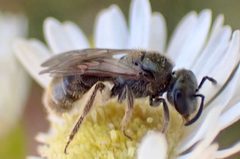
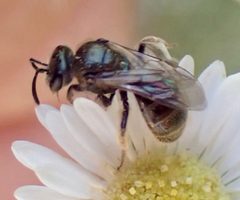

Pronunciation
How to pronounce Lasioglossum versatum: //ˌlæsiəˈɡlɒsəm vərˈsætəm//
These audio files are automatically generated. While they are not always 100% accurate, they are a good starting point.
Identification
Lasioglossum versatum is a member of the subgenus Dialictus, a group characterized by small size (typically 4-8 mm), metallic coloration (often green, blue, or bronze), and morphological similarity that makes -level identification challenging. Definitive identification requires examination of microscopic features such as punctation patterns on the mesosoma and propodeum, genitalia structure in males, and specific characteristics. The 2010 revision by Gibbs provides species descriptions and illustrations for separation from the 83 other metallic Dialictus species in Canada. L. versatum is distinguished from by subtle morphological traits detailed in dichotomous keys; field identification to species is generally not reliable without specimen collection and expert analysis.
Images
Distribution
North America; recorded from Canada and the United States. Specific documented locations include Vermont, USA. The occurs within the broader range of the subgenus Dialictus, which is widespread across the continent.
Ecological Role
As a member of Lasioglossum, L. versatum likely functions as a of native flowering plants. Lasioglossum collectively represent one of the most abundant and diverse genera in North America, contributing significantly to pollination services in both natural and agricultural . The subgenus Dialictus specifically has been documented as frequently captured in bee bowl surveys, indicating substantial presence in bee , though this may reflect sampling toward small, abundant species rather than exceptional ecological importance.
Human Relevance
L. versatum has minimal direct human relevance. Like other sweat bees, it poses minimal sting risk; females can sting but are not aggressive, and males lack stingers. The may occasionally be attracted to human perspiration for salts and minerals. Indirectly, it contributes to wild diversity documented in ecological studies and pollination research. The species name has been misapplied in past taxonomic usage, complicating historical literature interpretation.
Similar Taxa
- Lasioglossum versans (Lovell)Similar name and congeneric status; historically confused due to nomenclatural similarities. L. versans has distinct synonymy (Halictus brevibasis Cockerell) and separate species description.
- Other Lasioglossum (Dialictus) speciesMorphologically similar small metallic sweat bees requiring microscopic examination for separation; the 2010 Gibbs revision treats 84 metallic Dialictus in Canada alone, many with overlapping external features.
More Details
Taxonomic History
L. versatum has a complex taxonomic history with three synonymies formally proposed in Gibbs (2010): Halictus (Chloralictus) apertus Sandhouse, H. (C.) genuinus Sandhouse, and H. subconnexus rohweri Ellis. The epithet has been subject to past misapplication in literature, with names sometimes used in senses different from the name-bearing type. The and define the species; even paratypes in some Dialictus species have been found not to correspond to the same species as the name-bearing type, highlighting identification challenges in this group.
Research Context
L. versatum is mentioned in ecological literature primarily as part of the broader Lasioglossum (Dialictus) frequently captured in monitoring studies. Bowl trap sampling methods, commonly used in bee surveys, disproportionately collect Halictidae including Lasioglossum , potentially skewing diversity estimates. The 2020 study by Portman et al. critiques this methodological , noting that Lasioglossum and other halictids often dominate bowl trap catches while not necessarily representing the most functionally important in the local bee .
Sources and further reading
- BugGuide
- Wikipedia
- GBIF taxonomy match
- iNaturalist taxon
- NCBI Taxonomy
- Catalogue of Life
- Just inTime for Pollinator Week | Bug Squad
- Bug Eric: Don't Sweat 'em
- Back-Seat Driver: The Parasite That Makes Bees Drop Off Its Babies
- Building a Better Bee Trap: Researchers Say Bee Bowls Are Overused
- Bug Eric: White Prairie Clover: An Awesome Blossom
- Not-so Solitary Bees - Buglife Blog - Buglife
- Revision of the metallic species of Lasioglossum (Dialictus) in Canada (Hymenoptera, Halictidae, Halictini)