
Lasioglossum sisymbrii
(Cockerell, 1895)
Tansy Mustard Sweat Bee
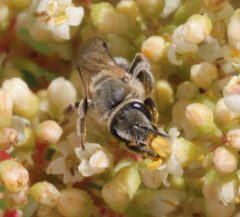
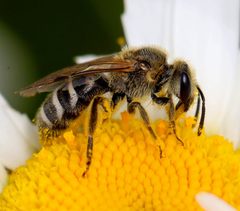
Lasioglossum sisymbrii is a small sweat bee in the Halictidae, commonly known as the Tansy Mustard Sweat Bee. It belongs to one of the largest , with over 1,700 . The species is frequently captured in bowl traps used for bee monitoring, often in large numbers relative to other bee species. It occurs in western North America and has been documented visiting flowers of tansy-mustard (Descurainia spp.) and related plants in the mustard family.
Pronunciation
How to pronounce Lasioglossum sisymbrii: /ˌlæsiːoʊˈɡlɑːsəm sɪˈsɪmbraɪ/
These audio files are automatically generated. While they are not always 100% accurate, they are a good starting point.
Identification
Accurate identification of L. sisymbrii requires specialized taxonomic expertise and microscopic examination. The belongs to the subgenus Dialictus, which contains hundreds of morphologically similar species. Key characters include details of male genitalia, wing venation, and punctation patterns on the and . Bowl trap containing numerous small halictids frequently include this species, but it cannot be reliably distinguished from without expert identification. It may be separated from some sympatric Lasioglossum by its association with specific plants, though this is not definitive.
Images
Habitat
Found in dry, open including prairies, meadows, and disturbed areas where plants in the mustard occur. Associated with foothill and montane environments in western North America. Nests in soil, with females excavating individual burrows.
Distribution
Western North America, ranging from British Columbia and Washington south through Oregon, California, and into the southwestern United States. Distribution records also indicate presence in Middle America. The occurs primarily west of the Rocky Mountains, with records from the Cascade Range, Sierra Nevada, and coastal regions.
Seasonality
activity period corresponds with bloom of mustard plants, typically spring through early summer. In lower elevations, active from late February through June; at higher elevations, period extends into summer months. Exact varies with local climate conditions.
Diet
feed on nectar and collect pollen from flowers, particularly those of tansy-mustard (Descurainia spp.) and related Brassicaceae. The reflects this documented association with Sisymbrium and Descurainia plants.
Host Associations
- Descurainia spp. - Pollen sourceTansy-mustard; primary plant for pollen collection
- Sisymbrium spp. - Pollen sourceHedge mustards; documented plants
- Arabis spp. - Possible pollen sourceRock-cresses; related mustards that may be visited
Life Cycle
Solitary or weakly social nesting typical of many Lasioglossum . Females excavate nest burrows in soil, provisioning individual with pollen and nectar. Development includes , larval, and pupal stages within the nest. Detailed specific to this species has not been documented.
Behavior
Females are ground-nesting and collect pollen and nectar to provision . Males patrol for females, often at flowers or nesting . Like other small halictids, individuals are frequently captured in pan traps, suggesting attraction to visual cues. Foraging is tied to mustard bloom .
Ecological Role
of early spring wildflowers in the mustard , contributing to plant in dry meadow and prairie . As a common and abundant in many western , it likely provides significant pollination services within its season. Serves as for parasitic insects including strepsipterans, though specific records for this species are not documented.
Human Relevance
Contributes to pollination of native plants and potentially some crop . Frequently encountered in biodiversity surveys and monitoring programs using bowl traps, where it represents a substantial portion of captures. The species illustrates challenges in bee monitoring: it is abundant in trap but requires taxonomic expertise to identify, creating logistical burdens for researchers processing large collections.
Similar Taxa
- Other Lasioglossum (Dialictus) speciesHundreds of morphologically similar small dark sweat bees in the same subgenus; require microscopic examination and specialized keys for separation.
- Halictus rubicundusAnother common sweat bee, but larger with distinct pale abdominal bands; more robust build and different facial markings.
- Agapostemon speciesBright metallic green or blue sweat bees; striking coloration absent in L. sisymbrii.
- Syrphidae (hover flies)Small flies frequently mistaken for sweat bees by casual observers; have single pair of wings (vs. two in bees), large , and different .
More Details
Taxonomic Challenges
Lasioglossum sisymbrii exemplifies the identification difficulties that make halictid bees problematic in ecological studies. The contains over 1,700 , many requiring dissection and expert knowledge to distinguish. Bowl trap monitoring methods frequently capture large numbers of these small bees, creating substantial backlogs for identification and storage.
Monitoring Bias
Research on monitoring methods indicates that bowl traps may overrepresent certain halictid including Lasioglossum while underrepresenting other bee . This sampling complicates efforts to assess true bee diversity and abundance patterns.
Sources and further reading
- BugGuide
- GBIF taxonomy match
- iNaturalist taxon
- NCBI Taxonomy
- Catalogue of Life
- Just inTime for Pollinator Week | Bug Squad
- Bug Eric: Spring White
- Bug Eric: Don't Sweat 'em
- Back-Seat Driver: The Parasite That Makes Bees Drop Off Its Babies
- Bug Eric: Marble-ous!
- Building a Better Bee Trap: Researchers Say Bee Bowls Are Overused