
Lasioglossum quebecense
(Crawford, 1907)
Quebec Sweat Bee
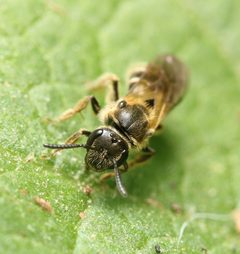
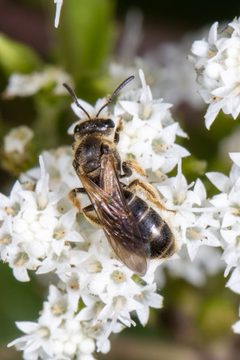
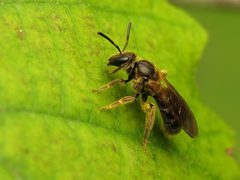
Lasioglossum quebecense is a of sweat bee in the Halictidae, native to North America. As a member of the Lasioglossum—one of the largest genera with over 1,700 species—it contributes to pollination services in its native range. The species was first described by Crawford in 1907. Like other sweat bees, it is attracted to human perspiration for moisture and salts.
Pronunciation
How to pronounce Lasioglossum quebecense: /ˌlæziˈoʊɡlɒsəm kwɪˈbɛksɛns/
These audio files are automatically generated. While they are not always 100% accurate, they are a good starting point.
Images
Habitat
Occurs in prairie and grassland . Has been observed visiting White Prairie Clover (Dalea candida) in shortgrass prairie fields at elevations between 3,400–7,200 feet.
Distribution
North America. Documented occurrences include Vermont, United States. The ' range extends across regions where prairie and grassland occur.
Diet
Visits flowers for pollen and nectar. Observed foraging on White Prairie Clover (Dalea candida), which blooms from June to August.
Behavior
Males have been observed approaching flowers for mating opportunities with foraging females. Like other sweat bees in the , individuals may alight on human skin to obtain moisture and salts from perspiration.
Ecological Role
Contributes to pollination of native prairie plants. As a member of the Halictidae , participates in the broader pollination network of grassland .
Human Relevance
May land on human skin to lap up perspiration, a that gives sweat bees their . The sting is generally mild, though individual reactions vary. Contributes to pollination of native plants in prairie restoration and conservation efforts.
Similar Taxa
- Other Lasioglossum speciesMany Lasioglossum are small, dark, and difficult to distinguish without close examination. L. quebecense is part of the subgenus Dialictus, which contains numerous morphologically similar species.
- Halictus speciesMedium-sized sweat bees with brown or blackish coloration and white abdominal bands. Halictus tend to be larger and more distinctly banded than many small Lasioglossum species.
- Agapostemon speciesBrilliant metallic green sweat bees that may occur in similar . Agapostemon are typically more conspicuously colored than L. quebecense.
More Details
Taxonomic Note
Lasioglossum is the largest of bees, with more than 1,700 described . The genus is frequently encountered in monitoring studies using bowl traps, though such traps may not provide representative of actual bee .
Conservation Context
Wild bees including Lasioglossum provide significant crop pollination services. Research indicates that a small subset of common wild species—including many Lasioglossum—account for the majority of crop visits, though this does not diminish the importance of conserving broader bee diversity for stability.
Sources and further reading
- BugGuide
- Wikipedia
- GBIF taxonomy match
- iNaturalist taxon
- NCBI Taxonomy
- Catalogue of Life
- Just inTime for Pollinator Week | Bug Squad
- The Native Bees in the UC Davis Bee Haven | Bug Squad
- Bug Eric: Don't Sweat 'em
- Back-Seat Driver: The Parasite That Makes Bees Drop Off Its Babies
- Building a Better Bee Trap: Researchers Say Bee Bowls Are Overused
- Bug Eric: White Prairie Clover: An Awesome Blossom