
Lasioglossum pectorale
(Smith, 1853)
Rugose-chested Sweat Bee
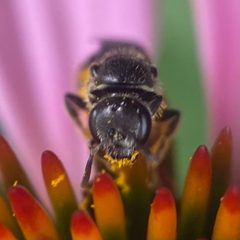
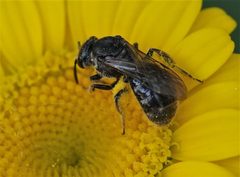
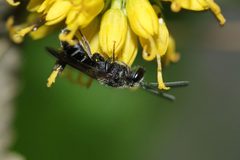
Lasioglossum pectorale is a small sweat bee in the Halictidae, first described by Frederick Smith in 1853. It belongs to the enormous Lasioglossum, which contains over 1,700 of halictid bees worldwide. Like other sweat bees, it is attracted to human perspiration for its salt and mineral content. The species is known to visit flowers of prairie clovers and other forbs.
Pronunciation
How to pronounce Lasioglossum pectorale: /ˌlæzioʊˈɡlɔsəm pɛkˈtɔreɪli/
These audio files are automatically generated. While they are not always 100% accurate, they are a good starting point.
Identification
The specific epithet 'pectorale' refers to (wrinkled) sculpturing on the , a key diagnostic feature distinguishing this from similar Lasioglossum. As with many halictids, microscopic examination is typically required for definitive species-level identification.
Images
Habitat
Found in prairie and grassland . Associated with shortgrass prairie where it visits flowering forbs, particularly Dalea candida (White Prairie Clover).
Distribution
North America. Documented from Vermont and across the Great Plains region of the United States.
Seasonality
Active during summer months. Observed visiting flowers from June through August in Colorado prairie .
Diet
feed on nectar and pollen. Has been observed foraging on Dalea candida (White Prairie Clover) and likely other prairie forbs.
Behavior
Males have been observed patrolling flowers, likely seeking mating opportunities with foraging females. Like other sweat bees, attracted to human perspiration.
Ecological Role
Contributes to pollination of prairie wildflowers. As a ground-nesting solitary or semi-social , it participates in soil turnover through nest excavation.
Human Relevance
Like other sweat bees, attracted to human perspiration but generally harmless unless handled roughly. Females can sting if threatened; males lack stingers. Contributes to native diversity in prairie .
Similar Taxa
- Other Lasioglossum speciesMany Lasioglossum are superficially similar small, dark sweat bees. L. pectorale is distinguished by thoracic sculpturing and typically requires microscopic examination to separate from .
- Halictus rubicundusAnother common sweat bee in similar , but larger with distinct pale abdominal banding; L. pectorale lacks such banding and is smaller.
- Agapostemon speciesBright metallic green sweat bees that may occur in similar ; L. pectorale is non-metallic and dull in coloration.
More Details
Taxonomic note
Lasioglossum is the largest of bees, with over 1,700 described . Species-level identification within this genus is notoriously difficult and typically requires examination of microscopic characters such as wing venation, punctation , and male genitalia.
Research significance
like L. pectorale are frequently captured in large numbers in bowl monitoring surveys, which has prompted methodological concerns in bee research about whether such traps accurately represent local bee .
Sources and further reading
- BugGuide
- Wikipedia
- GBIF taxonomy match
- iNaturalist taxon
- NCBI Taxonomy
- Catalogue of Life
- Just inTime for Pollinator Week | Bug Squad
- Bug Eric: Don't Sweat 'em
- Back-Seat Driver: The Parasite That Makes Bees Drop Off Its Babies
- Building a Better Bee Trap: Researchers Say Bee Bowls Are Overused
- Bug Eric: White Prairie Clover: An Awesome Blossom
- Not-so Solitary Bees - Buglife Blog - Buglife