
Lasioglossum nymphale
(Smith, 1853)
sweat bee
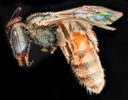
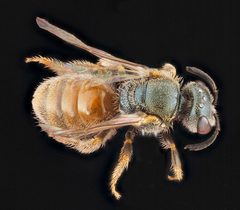
Lasioglossum nymphale is a of sweat bee in the Halictidae, first described by Smith in 1853. As a member of the large Lasioglossum, it belongs to a group of small, often metallic bees commonly known as sweat bees due to their attraction to human perspiration. The species occurs in North America and shares the general of other Lasioglossum species, including ground-nesting and solitary or semi-social nesting habits.

Pronunciation
How to pronounce Lasioglossum nymphale: //ˌleɪ.si.oʊˈɡlɒsəm ˈnɪm.fə.li//
These audio files are automatically generated. While they are not always 100% accurate, they are a good starting point.
Images
Distribution
North America
Ecological Role
As a member of Halictidae, L. nymphale likely contributes to pollination of native plants, though specific records are not documented in available sources.
Human Relevance
Like other sweat bees, individuals may be attracted to human perspiration to obtain salts and minerals; females possess a mild sting that is rarely used unless the is trapped or crushed.
Similar Taxa
- Lasioglossum (subgenus Dialictus)Small, often metallic sweat bees in this subgenus are frequently encountered together and require microscopic examination for definitive identification; L. nymphale belongs to this subgenus and shares its general .
- Halictus speciesMedium-sized brown or blackish sweat bees with white abdominal bands can resemble Lasioglossum , but Halictus typically have more pronounced banding and different wing venation.
Sources and further reading
- BugGuide
- Wikipedia
- GBIF taxonomy match
- iNaturalist taxon
- NCBI Taxonomy
- Catalogue of Life
- Just inTime for Pollinator Week | Bug Squad
- Bug Eric: Don't Sweat 'em
- Back-Seat Driver: The Parasite That Makes Bees Drop Off Its Babies
- Building a Better Bee Trap: Researchers Say Bee Bowls Are Overused
- Bug Eric: White Prairie Clover: An Awesome Blossom
- Not-so Solitary Bees - Buglife Blog - Buglife