
Lasioglossum lineatulum
(Crawford, 1906)
Lineated Metallic Sweat Bee
Lasioglossum lineatulum is a metallic sweat bee in the subgenus Dialictus, one of the most commonly collected groups in North America. The was described by Crawford in 1906 and has undergone taxonomic revision, with Halictus (Chloralictus) latus and H. (C.) unicus synonymized under this name. As a member of the largest bee , it contributes to the high abundance of Lasioglossum species frequently captured in bee monitoring surveys.
Pronunciation
How to pronounce Lasioglossum lineatulum: /ˌlæsiˈɔːɡlɒsəm ˌlɪniəˈtjuːləm/
These audio files are automatically generated. While they are not always 100% accurate, they are a good starting point.
Identification
Identification to level requires microscopic examination and reference to the taxonomic revision by Gibbs (2010), which provides complete species descriptions with illustrations and diagnostic keys for Canadian Dialictus. The species can be distinguished from other metallic Lasioglossum through characters detailed in that revision, though field identification is extremely difficult without specimen preparation and expert analysis.
Images
Appearance
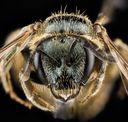
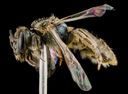
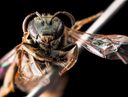
A small metallic sweat bee with characteristic Dialictus . As a metallic within the subgenus, it likely exhibits green, blue, or bronze coloration typical of the group. Detailed morphological features would require examination of the original species description in Gibbs (2010).
Distribution
North America; recorded from Canada and the United States including Vermont.
Human Relevance
Like other Lasioglossum , individuals may be attracted to human perspiration for salts and minerals, though this has not been specifically documented for L. lineatulum. The species is likely captured frequently in bowl trap surveys due to the general tendency of halictid bees to be attracted to these monitoring devices.
Similar Taxa
- Other Lasioglossum (Dialictus) speciesExtremely difficult to distinguish without detailed morphological examination; many in this subgenus share metallic coloration and small size, requiring expert identification using microscopic characters.
- Halictus speciesMedium-sized brown or blackish sweat bees with white abdominal bands can be confused with metallic Lasioglossum in general appearance, though Halictus lack the metallic sheen typical of L. lineatulum.
More Details
Taxonomic History
Gibbs (2010) treated Halictus (Chloralictus) unicus Sandhouse as a junior synonym of L. lineatulum, reaffirming its synonymy status. The is one of 84 metallic Dialictus treated in the Canadian revision.
Monitoring Considerations
As with many Lasioglossum , L. lineatulum may be overrepresented in bowl trap relative to its actual abundance in the environment, a known in monitoring methods.
Sources and further reading
- BugGuide
- Wikipedia
- GBIF taxonomy match
- iNaturalist taxon
- NCBI Taxonomy
- Catalogue of Life
- Just inTime for Pollinator Week | Bug Squad
- Bug Eric: Don't Sweat 'em
- Back-Seat Driver: The Parasite That Makes Bees Drop Off Its Babies
- Building a Better Bee Trap: Researchers Say Bee Bowls Are Overused
- Bug Eric: White Prairie Clover: An Awesome Blossom
- Not-so Solitary Bees - Buglife Blog - Buglife
- Revision of the metallic species of Lasioglossum (Dialictus) in Canada (Hymenoptera, Halictidae, Halictini)