
Lasioglossum cinctipes
(Provancher, 1888)
Lasioglossum cinctipes is a of sweat bee in the Halictidae, a group of small to medium-sized bees commonly attracted to human perspiration for its salt content. As a member of the Lasioglossum—one of the largest genera with over 1,700 species—this bee is part of a diverse lineage of ground-nesting solitary to semi-social bees. The species is documented from North America, with records from Vermont and other regions.
Pronunciation
How to pronounce Lasioglossum cinctipes: /ˌlæsi.oʊˈɡlɒsəm ˈsɪŋktɪˌpiːz/
These audio files are automatically generated. While they are not always 100% accurate, they are a good starting point.
Identification
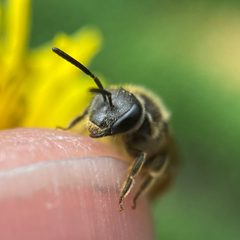
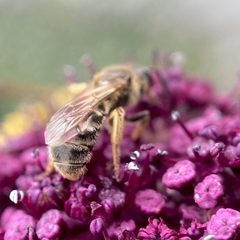
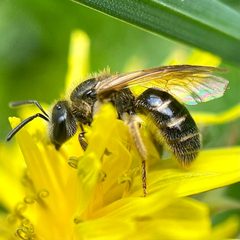
Members of Lasioglossum are typically small, often metallic bees that can be challenging to identify to level without microscopic examination. The "cinctipes" (meaning "banded feet") may refer to leg markings, though this trait requires verification against . Lasioglossum species generally have short tongues adapted for lapping sweat and shallow flowers. Distinguishing L. cinctipes from other Lasioglossum species requires examination of subtle morphological characters such as punctation patterns, genitalia, and specific coloration details.
Images
Distribution
North America; specifically recorded from Vermont, United States. GBIF distribution records indicate presence in North America broadly.
Diet
have been observed lapping human sweat for salts and minerals, a characteristic of the Halictidae. Like other sweat bees, they likely visit flowers for nectar and pollen, though specific floral associations for this are not documented in the provided sources.
Behavior
exhibit sweat-seeking , landing on humans to obtain moisture and salts from perspiration. This behavior is common across Halictidae and is not aggressive—these bees are generally harmless and only sting if trapped or crushed. The nests in soil, with females excavating individual burrows.
Ecological Role
As a , this contributes to functioning through flower visitation, though its specific role in crop or wild plant pollination has not been quantified. Like other Lasioglossum species, it may be captured in large numbers in bowl traps used for monitoring, potentially skewing diversity assessments.
Human Relevance
May land on humans to drink sweat, causing minor annoyance but posing no significant threat. Stings are mild but can occur if bees are trapped against skin. The is not a managed and has no documented economic importance.
Similar Taxa
- Other Lasioglossum speciesConvergent and small size make visual identification difficult; microscopic examination of diagnostic characters is required for reliable separation.
- Halictus speciesAlso in Halictidae and share sweat-seeking , but Halictus are generally medium-sized with distinct pale abdominal bands, whereas Lasioglossum are often smaller and more variable in coloration.
- Syrphidae (flower flies/hover flies)Commonly mistaken for sweat bees in casual observation due to similar size and flower-visiting , but flies have only one pair of wings and lack the constricted waist of Hymenoptera.
More Details
Taxonomic note
The specific epithet "cinctipes" was established by Provancher in 1888. The is accepted in current taxonomic databases including Catalogue of Life, GBIF, and NCBI.
Research methods context
Lasioglossum , including L. cinctipes, are frequently captured in large numbers in bowl trap surveys. Researchers have cautioned that such traps may over-represent halictid diversity relative to other , potentially biasing ecological conclusions.
Sources and further reading
- BugGuide
- Wikipedia
- GBIF taxonomy match
- iNaturalist taxon
- NCBI Taxonomy
- Catalogue of Life
- Just inTime for Pollinator Week | Bug Squad
- Bug Eric: Don't Sweat 'em
- Back-Seat Driver: The Parasite That Makes Bees Drop Off Its Babies
- Building a Better Bee Trap: Researchers Say Bee Bowls Are Overused
- Bug Eric: White Prairie Clover: An Awesome Blossom
- Not-so Solitary Bees - Buglife Blog - Buglife