
Lasioglossum birkmanni
(Crawford, 1906)
Birkmann's Sweat Bee
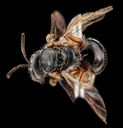
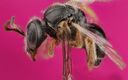
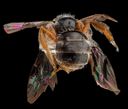
Lasioglossum birkmanni is a of sweat bee in the Halictidae, native to North America. Like other members of the Lasioglossum, it is a small that typically nests in soil. The species was described by Crawford in 1906. As with many Lasioglossum species, detailed natural history information specific to L. birkmanni is limited in available sources.
Pronunciation
How to pronounce Lasioglossum birkmanni: /ˈlæziəʊˌɡlɒsəm bɜːrkˈmɑːni/
These audio files are automatically generated. While they are not always 100% accurate, they are a good starting point.
Identification
Lasioglossum birkmanni belongs to the subgenus Dialictus within Lasioglossum, a group characterized by small body size and often metallic coloration. -level identification within Dialictus typically requires examination of microscopic characters such as punctation patterns on the and , wing venation, and male genitalia. Without specific diagnostic characters documented for L. birkmanni, it cannot be reliably distinguished from similar congeneric species based on general descriptions alone.
Images
Habitat
Based on documented distribution records from Vermont and the broader North American range, the likely inhabits temperate environments. As a ground-nesting halictid, it would be expected in areas with suitable soil substrates for burrow excavation, though specific preferences for this species are not documented.
Distribution
Documented distribution records indicate presence in North America, with specific occurrence data from Vermont, United States. The GBIF database records the as present in North America generally.
Ecological Role
As a member of Halictidae, L. birkmanni likely functions as a in the where it occurs. The Lasioglossum includes numerous that are common and widespread flower visitors, contributing to pollination services in both natural and agricultural settings.
Similar Taxa
- Lasioglossum (Dialictus) speciesThe subgenus Dialictus contains over 200 in North America, many of which are morphologically similar and require expert identification. L. birkmanni would be difficult to distinguish from these without detailed examination.
- Other Halictidae generaSmall size and general appearance may cause confusion with other halictid such as Halictus or Agapostemon, though these typically differ in coloration, banding patterns, or body proportions.
More Details
Taxonomic placement
Lasioglossum is the largest of bees, with over 1,700 globally. The subgenus Dialictus, to which L. birkmanni belongs, is particularly species-rich in North America and presents significant identification challenges.
Data limitations
Available sources provide minimal -specific information for L. birkmanni. Most knowledge about the species is inferred from -level characteristics or the broader subgenus Dialictus, rather than direct observation or study of this particular species.
Sources and further reading
- BugGuide
- GBIF taxonomy match
- iNaturalist taxon
- NCBI Taxonomy
- Catalogue of Life
- Just inTime for Pollinator Week | Bug Squad
- Bug Eric: Don't Sweat 'em
- Back-Seat Driver: The Parasite That Makes Bees Drop Off Its Babies
- Building a Better Bee Trap: Researchers Say Bee Bowls Are Overused
- Bug Eric: White Prairie Clover: An Awesome Blossom
- Not-so Solitary Bees - Buglife Blog - Buglife