
Crematogaster pilosa
Emery, 1895
Hairy-headed Acrobat Ant
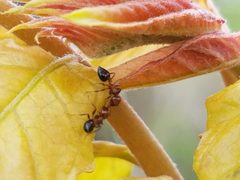
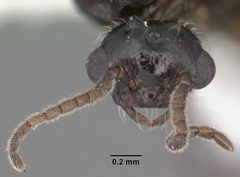
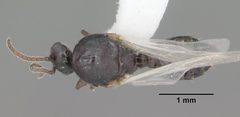
Crematogaster pilosa is a polydomous native to the southern Atlantic coast of the United States and some interior areas. It forms multiple spatially separated nests per colony, typically inhabiting tidal marshes, wet meadows, and other wetland environments. The species nests in plant stems, logs, and fallen branches. Its 'Hairy-headed Acrobat Ant' refers to its pilose (hairy) and the characteristic acrobat ant of raising the () over the when disturbed.
Pronunciation
How to pronounce Crematogaster pilosa: /kɹɛˌmætəˈɡæstər pɪˈloʊsə/
These audio files are automatically generated. While they are not always 100% accurate, they are a good starting point.
Identification
Crematogaster pilosa can be distinguished from other Crematogaster by its pilose (hairy) , a trait referenced in its specific epithet and . As with other acrobat ants in the , it exhibits the diagnostic 'acrobatic' posture of elevating the when alarmed. The species is part of the Myrmicinae, characterized by a two-segmented petiole and sting apparatus. Specific morphological measurements and detailed diagnostic characters distinguishing it from in its range are not documented in available sources.
Images
Habitat
Tidal salt marshes, intertidal salt marshes, wet meadows, and other wetland environments. Nests occur in plant stems, logs, and fallen branches. The exhibits a documented preference for highly connected within tidal marsh landscapes, suggesting that landscape connectivity influences colony distribution and structure.
Distribution
Native to the southern Atlantic coast of the United States and some interior areas. Distribution includes coastal and near-coastal regions from this range extending inland to associated wetland .
Behavior
Forms polydomous colonies with multiple spatially separated nests per colony. Exhibits preference for highly connected , indicating that landscape structure influences colony organization. Displays typical acrobat of raising the over the when disturbed.
Similar Taxa
- Crematogaster laeviusculaAnother acrobat ; C. laeviuscula has been documented as a nest of paper wasps (Polistes exclamans), a not reported for C. pilosa. C. pilosa is distinguished by its pilose and preference for tidal marsh versus the more nesting habits of C. laeviuscula.
- Crematogaster striatulaAfrican myrmicine in the same ; C. striatula is known for spraying venom on from a distance, a defensive not documented for C. pilosa. The two are , with C. striatula occurring in Africa and C. pilosa restricted to North America.
Sources and further reading
- BugGuide
- Wikipedia
- GBIF taxonomy match
- iNaturalist taxon
- NCBI Taxonomy
- Bembicid Holdings | Entomology Research Museum
- Bug Eric: Wasp Wednesday: Polistes exclamans
- 52-million-year-old Beetle Fossil is Oldest Known Practitioner of Myrmecophily
- Bug Eric: Green Lynx Spider
- Bug Eric: Termite Swarms
- How Ants Do Battle: Toxic Sprays, Thick Armor, Overwhelming Numbers, and More
- Habitat Requirements and Occurrence ofCrematogaster pilosa(Hymenoptera: Formicidae) Ants within Intertidal Salt Marshes
- PolydomousCrematogaster pilosa(Hymenoptera: Formicidae) Colonies Prefer Highly Connected Habitats in a Tidal Salt Marsh