
Cardiocondyla mauritanica
Forel, 1890
Moorish Sneaking Ant
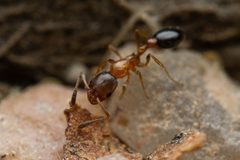
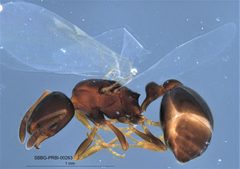
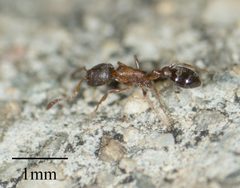
Cardiocondyla mauritanica is a small myrmicine originally described from North Africa and the Middle East. It has become a widespread tramp , now established in numerous regions worldwide through human-mediated . The species belongs to a noted for remarkable morphological and behavioral diversity, particularly among male ants.
Pronunciation
How to pronounce Cardiocondyla mauritanica: //ˌkɑr.di.oʊˈkɒn.dɪ.lə ˌmɔːr.ɪˈtæn.ɪ.kə//
These audio files are automatically generated. While they are not always 100% accurate, they are a good starting point.
Identification
Cardiocondyla mauritanica can be distinguished from other Cardiocondyla by its small size and specific morphological characters, though precise diagnostic features require expert examination. The is characterized by 11-segmented with a 3-segmented club, and typically lack propodeal spines or have them reduced. Identification to species level generally requires examination of male genitalia and detailed morphometric analysis.
Images
Distribution
Native to North Africa and the Middle East. Now a widespread tramp with established virtually worldwide, including records from Cyprus, the Azores (Santa Maria, Terceira), and Barbados.
Behavior
As a tramp , Cardiocondyla mauritanica has been observed to disperse widely through human commerce and transport. The Cardiocondyla is known for unusual male and mating , including the presence of both winged and wingless male forms in some species, though specific documentation for C. mauritanica is limited.
Human Relevance
Cardiocondyla mauritanica is considered a tramp that has spread globally through human activity. Its small size and inconspicuous nature mean it is rarely noticed, and it does not appear to cause significant economic damage or pose notable nuisance problems.
Similar Taxa
- Cardiocondyla pirataBoth belong to the same and share small size and general body plan, but C. pirata is distinguished by the distinctive dark stripe across the in female , a pigmentation pattern absent in C. mauritanica.
- Other Cardiocondyla tramp speciesMultiple Cardiocondyla have become globally distributed through human transport, and accurate identification requires detailed morphological examination, particularly of male genitalia and specific body proportions.
More Details
Taxonomic status
Accepted , described by Auguste Forel in 1890. The species epithet 'mauritanica' refers to its North African origin.
Genus characteristics
Cardiocondyla is notable for extreme morphological and behavioral diversity of male ants, including the presence of both winged and wingless male morphs in some , and specialized fighting among males.