
Mycetomoellerius turrifex
(Wheeler, 1903)
Turret Fungus-farming Ant
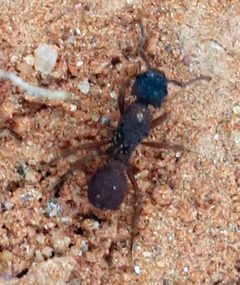
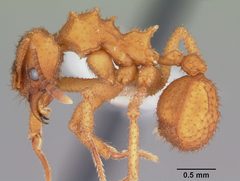
Mycetomoellerius turrifex is a fungus-farming in the tribe Attini, known for cultivating mutualistic fungi in subterranean gardens. The was transferred from Trachymyrmex to the newly erected Mycetomoellerius in 2019 based on molecular phylogenetic evidence. Colonies exhibit complex social dynamics, including the presence of non-inseminated queens that adopt -like . Colony foundation involves pleometrosis, where multiple queens cooperate to establish new nests.
Pronunciation
How to pronounce Mycetomoellerius turrifex: //ˌmaɪ.səˌtoʊˈmɒl.ɛr.i.əs ˈtʊr.ɪˌfɛks//
These audio files are automatically generated. While they are not always 100% accurate, they are a good starting point.
Identification
Distinguished from former in Trachymyrmex by molecular phylogenetic characters that prompted generic reclassification; external morphological differences from similar attine ants require examination. The specific epithet "turrifex" (Latin: tower-builder) may reference nest architecture, though this has not been explicitly documented in available sources.
Images
Habitat
Subterranean nests containing fungus gardens cultivated on organic substrates; specific soil or vegetation preferences not documented in available sources.
Distribution
Recorded from Texas, USA; broader geographic range not established in available sources.
Seasonality
Non-inseminated queens observed outside nests in November 1999 and May 2000; colonies collected in October 2001 contained only inseminated queens, suggesting seasonal variation in or colony composition.
Diet
Obligate mutualist with cultivated fungal ; fungus garden maintained on organic substrate. may consume in colonies containing non-inseminated queens.
Life Cycle
Colony foundation involves pleometrosis (cooperative founding by multiple queens). Colonies may contain both inseminated and non-inseminated queens simultaneously. Non-inseminated queens persist in established colonies rather than being eliminated.
Behavior
Non-inseminated queens exhibit behavioral plasticity, performing -like tasks including foraging outside the nest, digging nest floors, guarding, and maintaining fungus gardens— distinct from those of inseminated queens, which remain in the nest. Workers in colonies with non-inseminated queens may oviposit .
Ecological Role
Engages in obligate fungal mutualism; processes organic matter through fungal . Specific functions beyond attine-typical decomposition not documented.
Similar Taxa
- Trachymyrmex speciesFormerly classified within this ; separated by molecular phylogenetic analysis in 2019. External may overlap; definitive identification requires genetic or detailed morphological examination.
- Other Mycetomoellerius speciesCongeneric fungus-farming ants sharing attine characteristics; differentiation requires taxonomic knowledge.
More Details
Taxonomic History
Originally described as Trachymyrmex turrifex by Wheeler in 1903. Two (T. t. caroli and T. t. turrifex) were previously recognized but not supported as distinct by Solomon et al. (2019). Generic transfer to Mycetomoellerius based on molecular phylogenetic analysis published in 2019.
Reproductive Biology
Presence of non-inseminated queens appears linked to environmental conditions; colonies collected after severe environmental fluctuations in southern Texas contained non-inseminated queens, while those collected under stable conditions were monogynous with only inseminated queens. Non-inseminated queens function as temporary labor force rather than being eliminated by the colony.