
Atta mexicana
(Smith, 1858)
Chicatana Leafcutter Ant, Chicatana, Hormiga Podadora de Hoja, Mochomo, Nucú, Nacasmá, Cocosh
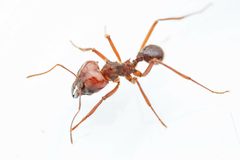
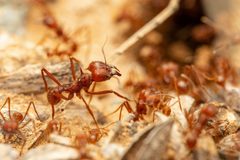
Atta mexicana is a and advanced attine fungus-grower native to Mexico and the southwestern United States. The cultivates the basidiomycete fungus Leucoagaricus gongylophorus as its primary food source, cutting and collecting leaf fragments to serve as fungal substrate. Colonies are large and complex, with sophisticated specialization including queens (~30 mm), , and soldiers (~18 mm). The species is culturally significant in Mexico as a traditional food source (chicatana) harvested during , and is also recognized as an agricultural pest in some contexts.
Pronunciation
How to pronounce Atta mexicana: /ˈætə mɛkˈsænə/
These audio files are automatically generated. While they are not always 100% accurate, they are a good starting point.
Identification
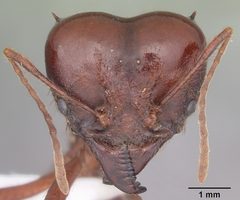
Distinguished from other leafcutter ants (Atta spp.) by geographic range centered on Mexico extending into Arizona. Differs from Acromyrmex by having three pairs of spines on the promesonotum versus typically four pairs in Acromyrmex. The combination of large colony size, extensive foraging trails, and waste dump mounds outside nest entrances aids identification. Oleic acid triggers undertaking , a trait used in laboratory identification of task-related behaviors. Molecular and morphological examination may be required for definitive separation from closely related Atta species.
Images
Habitat
Found in diverse environments from arid zones to tropical deciduous forests and urban areas. Thrives in human-modified landscapes including resort and cities. Nests are subterranean with extensive tunnel systems and above-ground waste dumps. In urban environments, colonies establish in parks, gardens, and green spaces. Natural include montane cloud forest fragments and areas with suitable forage plants such as Palicourea padifolia, Platanus mexicana, and Eriobotrya japonica.
Distribution
Native to Mexico, where it is widely distributed and commonly known as chicatana. Range extends northward into Arizona, United States. Documented in inter-tropical regions of Central Mexico, Veracruz, Chiapas, Oaxaca, Guerrero, Puebla, Morelos, Guanajuato, and Estado de México. Highly adaptive to urban environments with documented high nest densities in Puerto Vallarta and Nuevo Vallarta.
Seasonality
occur at the start of the rainy season when soil becomes wet, typically late May to early July depending on region. In Chiapas, harvested from late May to early July. This period represents peak above-ground activity associated with colony and new colony foundation. Year-round activity within nests with seasonal variation in foraging intensity.
Diet
Obligate fungus-grower that cultivates Leucoagaricus gongylophorus (Agaricaceae) as primary nutritional source. Forages for fresh leaf material, flower petals, and stems to serve as fungal substrate. Laboratory studies demonstrate preferential selection of Palicourea padifolia leaves over Platanus mexicana and Eriobotrya japonica, favoring glabrous, high-moisture, low-metabolite foliage. Avoids leaves with trichomes, high toughness, and elevated phenols, flavonoids, and tannins. Fungal gongylidia structures harvested and distributed to larvae, , and .
Host Associations
- Leucoagaricus gongylophorus - mutualistic fungusCultivated basidiomycete fungus grown on leaf substrate; primary food source for colony
- Palicourea padifolia - forage plantPreferred leaf source in laboratory studies; promotes fungal growth
- Platanus mexicana - forage plantLess preferred due to trichomes, toughness, and defensive metabolites
- Eriobotrya japonica - forage plantLess preferred; extracts moderately inhibit fungal growth
Life Cycle
Complete with holometabolous development. Colonies are founded by mated queens following . Queens establish new colonies and initiate fungal gardens using carried . Colony grows through production of (minims, media, majors/soldiers). Mature colonies contain several million individuals. Waste dumps accumulate outside nest entrances containing discarded fungal material, dead organisms, and detritus. Lifespan of individual workers varies by caste; queens may live multiple years.
Behavior
Exhibits complex social organization with task specialization among . Foragers cut leaf sections and transport them along -marked trails extending over 200 yards. Smaller hitchhike on leaves to defend against and parasitic flies. Soldiers specialize in colony defense with reduced behavioral repertoire and low olfactory response except to . Undertakers remove dead nestmates, triggered by oleic acid. First documented instance of trichome-removing when processing leaves. Constant nest maintenance including waste removal and fungal garden tending with detection and elimination of fungi.
Ecological Role
Major herbivore in native ; estimated to harvest over 10% of leaf production in tropical forests. Ecosystem engineer creating nutrient-rich waste dumps that serve as for diverse , functioning as islands of with elevated organic material, nutrients, and minerals. Improves soil conditions and increases spatial heterogeneity in carbon and nutrient cycling. Facilitates arthropod diversity in urban environments by providing , food sources, and oviposition sites. Contributes to plant material decomposition and soil enrichment in tropical and subtropical systems.
Human Relevance
Culturally significant traditional food source in Mexico, harvested during and prepared fried, toasted, or in stews and sauces (salsa de chicatanas, chilmole, tlatonile). Consumed in Chiapas, Oaxaca, Veracruz, Guerrero, Puebla, Morelos, Guanajuato, and Estado de México. Marketed as snack food and protein source. Simultaneously recognized as agricultural pest capable of defoliating crops and orchards overnight, causing significant economic losses. Subject to control in agricultural contexts, creating tension between conservation of food traditions and pest management. Lack of formal harvesting guidelines and erosion of traditional ecological knowledge threaten sustainability of use.
Similar Taxa
- Atta cephalotesSimilar leafcutter with polymorphic system; differs in distribution (more tropical South American) and minor morphological features requiring expert examination
- Acromyrmex spp.Also fungus-growing leafcutters; distinguished by four pairs of promesonotal spines versus three in Atta, and generally smaller colony sizes
- Atta sexdensClosely related leafcutter with overlapping range; definitive identification requires examination of specific morphological characters
More Details
Caste Olfactory Specialization
Electroantennographic studies demonstrate soldiers have reduced antennal sensitivity to most odors, responding primarily to , consistent with their specialized defensive role. Foragers and undertakers show broader olfactory responses corresponding to their diverse task repertoires.
Urban Adaptation
Highly adaptive to urbanization with documented high nest densities in resort . Thrives in anthropogenic environments where natural has been modified, representing a successful .
Waste Dump Ecology
Waste dumps serve as biodiversity in urban landscapes, with richness positively influenced by tree cover at landscape . Creates microhabitats with distinct temperature, humidity, and vegetation conditions supporting diverse .
Sources and further reading
- BugGuide
- Wikipedia
- GBIF taxonomy match
- iNaturalist taxon
- NCBI Taxonomy
- Catalogue of Life
- RJ Millena: from Entomology-Focused Kindergartener to Scoring Cover of Journal With Her Research | Bug Squad
- Seedling to tassel stage insect control - AgriLife Extension Entomology
- New Fossil Evidence Shows Beetles Pollinated Orchids Millions of Years Ago
- Bug Eric: Wasp Wednesday: More on Isodontia
- Cutting leaves here and there: Leafcutter bees, Megachilidae, and leafcutter ants, Atta spp. — Bug of the Week
- Rainforest Ants 1 - Tropical fungus farmers: Leafcutter ants, Atta and Acromyrmex spp. — Bug of the Week
- Harvesting wild edible insects: the case of chicatana ant ( Atta mexicana ) in Mexico
- Selection of leaves of Palicourea padifolia, Platanus mexicana and Eriobotrya japonica by Atta mexicana (Hymenoptera: Formicidae) and its influence on the growth of the mutualistic fungus Leucoagaricus gongylophorus Selección de hojas de Palicourea padifolia, Platanus mexicana y Eriobotrya japonica por Atta mexicana (Hymenoptera: Formicidae) y su influencia en el crecimiento del hongo mutualista Leucoagaricus gongylophorus
- Leaf-cutting ants (Atta mexicana) as facilitators of arthropods through waste dumps in a neotropical city of Mexico.
- Antennal olfactory sensitivity in response to task‐related odours of three castes of the ant Atta mexicana (hymenoptera: formicidae)