
Lasius minutus
Emery, 1893
Mound-building Swamp Ant
Lasius minutus is a of in the Lasius, commonly known as the Mound-building Swamp Ant. It is a small formicine ant that constructs mounds in wetland . The species has been studied using radioactive phosphorus tracing to understand colony distribution and spatial organization. It belongs to a genus known for citronella-scented defensive compounds and -tending , though species-specific traits for L. minutus require direct observation.
Pronunciation
How to pronounce Lasius minutus: //ˈlæsiəs maɪˈnuːtəs//
These audio files are automatically generated. While they are not always 100% accurate, they are a good starting point.
Identification
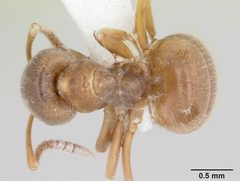
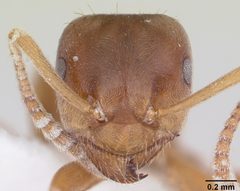
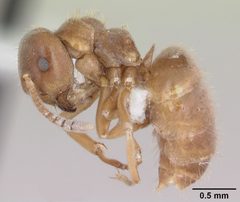
Lasius minutus can be distinguished from by its elbowed , narrow waist between and , and forewings larger than hindwings in winged forms. Within the Lasius, identification to level requires examination of morphological characters such as size, pilosity, and genitalia structure; specific diagnostic features for L. minutus versus like L. alienus or L. neoniger are not provided in available sources.
Images
Appearance
Small typical of the Lasius. are likely pale yellow to brownish in coloration, consistent with related in the genus. As with all Lasius, possesses elbowed (geniculate) , a narrow petiole (-waist) between and , and a compact body form. Winged reproductive forms, when present, have forewings larger than hindwings with few prominent .
Habitat
Wetland and swamp environments, as indicated by the 'Mound-building Swamp '. Constructs mounds in moist, poorly drained soils. Specific microhabitat preferences within wetlands (e.g., hummocks, edges, saturated soils) are not documented in available sources.
Distribution
Recorded from Vermont, United States based on distribution data. Broader North American range not specified in available sources; likely occurs in northeastern United States and possibly adjacent Canada given preferences and related distributions.
Behavior
Colony distribution and spatial organization have been studied using radioactive phosphorus as a tracer, indicating movement patterns and territorial structure. Specific such as foraging, nesting, or defensive responses are not documented in available sources.
Similar Taxa
- Lasius alienusSimilar small yellow Lasius ; requires morphological examination to distinguish
- Lasius neonigerAnother small mound-building Lasius with overlapping preferences
- Reticulitermes flavipesEastern subterranean termite; winged forms may be confused but have straight bead-like , broad waist, and equal-sized wings
More Details
Research Methods
Lasius minutus was the subject of a 1950s study using radioactive phosphorus (P-32) to trace colony distribution, representing an early application of isotope labeling techniques in myrmecology
Sources and further reading
- BugGuide
- GBIF taxonomy match
- iNaturalist taxon
- Catalogue of Life
- The Ants and Butterflies of Gates Canyon: Quite the Ecosystem | Bug Squad
- From the Bug of the Week mailbag, termites or ants? Eastern subterranean termites, Reticulitermes flavipes, or Citronella ants, Lasius sp. — Bug of the Week
- Different Jaws for Different Jobs | Beetles In The Bush
- sawfly | Blog
- Curious isolation: new butterfly species discovered | Blog
- distribution | Blog
- The Use of Radioactive Phosphorus in the Study of Colony Distribution of the Ant Lasius Minutus