
Camponotus schaefferi
Wheeler, 1909
Schaeffer's Carpenter Ant
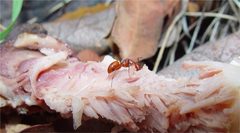
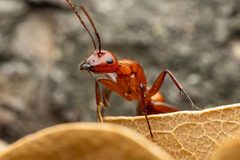
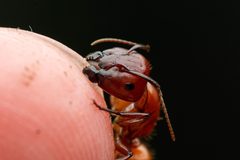
Camponotus schaefferi is a of carpenter ant in the Camponotus, described by Wheeler in 1909. It is native to the southwestern United States and possibly Venezuela. Like other carpenter ants, it excavates wood to create nest galleries rather than consuming wood for nutrition. The species belongs to the diverse subgenus Myrmobrachys, characterized by a relatively low and broad mesosoma.
Pronunciation
How to pronounce Camponotus schaefferi: /ˌkæmpəˈnoʊtəs ˈʃɛfəri/
These audio files are automatically generated. While they are not always 100% accurate, they are a good starting point.
Identification
Specific diagnostic features for Camponotus schaefferi are not documented in available sources. As a member of subgenus Myrmobrachys, it likely shares the group's characteristic low, broad mesosoma and distinctive tucked- posture. Differentiation from other southwestern Camponotus would require examination of specific morphological characters not detailed in accessible literature.
Images
Habitat
Nest sites are not documented for this . Based on characteristics, primary colonies likely occur in dead wood, decaying stumps, or hollow trees with high moisture content. Satellite colonies may establish in damp structural wood when moisture conditions permit.
Distribution
Recorded from Arizona and New Mexico in the southwestern United States. A single source also lists possible occurrence in Venezuela, though this requires verification. The Venezuelan record may represent a misidentification, introduction, or range disjunction.
Similar Taxa
- Camponotus musSimilar overall appearance including bulbous , shape, matte black coloration, and velvety yellowish abdominal pilosity. Both belong to subgenus Myrmobrachys and share the characteristic tucked- posture. C. mus is abundant in Argentina and neighboring regions, while C. schaefferi occurs in the southwestern United States.
- Camponotus planatusAlso in subgenus Myrmobrachys with similar mesosomal structure. C. planatus is native to the Neotropics but has become in Florida and Texas, potentially overlapping with C. schaefferi range in southern Texas.
More Details
Taxonomic history
Described by William Morton Wheeler in 1909, a prominent myrmecologist who authored foundational works on and .
Subgenus placement
Belongs to Myrmobrachys, one of numerous subgenera within the hyperdiverse Camponotus (1000+ ). Myrmobrachys species are primarily Neotropical and Nearctic in distribution.
Sources and further reading
- BugGuide
- Wikipedia
- GBIF taxonomy match
- iNaturalist taxon
- NCBI Taxonomy
- Carpenter ants here and there: Camponotus spp. — Bug of the Week
- Ant bodyguards here and there: Odorous house ants, Tapinoma sessile, and carpenter ants, Camponotus — Bug of the Week
- Big black ants in the home: Carpenter ants, Camponotus spp. — Bug of the Week
- Formicidae | Beetles In The Bush | Page 2
- Bichos Argentinos #10 – Friday Formicine | Beetles In The Bush
- Amped-Up Ants: Caterpillars' Sugary Treats Earn Carpenter Ant Care