
Camponotus acutirostris
Wheeler, 1910
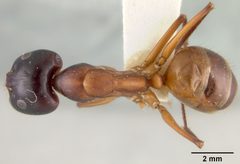
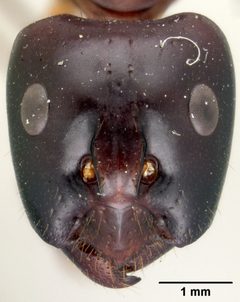
Camponotus acutirostris is a of carpenter ant described by Wheeler in 1910. The species is native to the southwestern United States and adjacent regions of northern Mexico, occurring in arid and semi-arid environments. As a member of the Camponotus, it nests in wood and exhibits the typical carpenter ant of excavating galleries rather than consuming wood as a food source.

Pronunciation
How to pronounce Camponotus acutirostris: /ˌkæmpəˈnoʊtəs əˌkjuːtɪˈrɒstrɪs/
These audio files are automatically generated. While they are not always 100% accurate, they are a good starting point.
Images
Habitat
Arid and semi-arid environments including desert scrub, grasslands, and riparian corridors in the southwestern United States and northern Mexico. Nests in dead wood, including standing dead trees, fallen branches, and stumps.
Distribution
Native to Utah, Arizona, New Mexico, and Texas in the United States, and Chihuahua and Baja California in Mexico.
More Details
Etymology
The specific epithet 'acutirostris' derives from Latin 'acutus' (sharp, pointed) and 'rostrum' (beak, snout), likely referring to a morphological feature of the or .
Sources and further reading
- BugGuide
- Wikipedia
- GBIF taxonomy match
- iNaturalist taxon
- Carpenter ants here and there: Camponotus spp. — Bug of the Week
- Ant bodyguards here and there: Odorous house ants, Tapinoma sessile, and carpenter ants, Camponotus — Bug of the Week
- Big black ants in the home: Carpenter ants, Camponotus spp. — Bug of the Week
- Formicidae | Beetles In The Bush | Page 2
- Bichos Argentinos #10 – Friday Formicine | Beetles In The Bush
- Amped-Up Ants: Caterpillars' Sugary Treats Earn Carpenter Ant Care