
Spilomicrini
Genus Guides
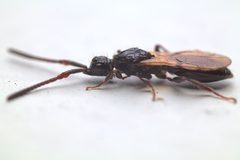
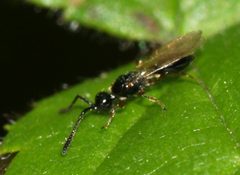
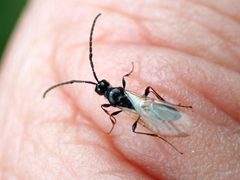
4Spilomicrini is a tribe of small within the Diapriidae (Hymenoptera). Members are generally melanic (dark-colored), with body lengths ranging from 1.5–4.5 mm. The tribe includes at least 14 and exhibits high and intraspecific morphological variation, which complicates identification. The genus Spilomicrus alone contains over 100 described species with worldwide distribution.
Pronunciation
How to pronounce Spilomicrini: /ˌspaɪloʊˈmaɪkrɪnaɪ/
These audio files are automatically generated. While they are not always 100% accurate, they are a good starting point.
Identification
Identification within Spilomicrini is challenging due to pronounced and substantial intraspecific variation in morphological traits. The tribe can be distinguished from other Diapriidae tribes by a combination of wing venation, antennal structure, and petiole , though specific diagnostic features vary among . has proven necessary for reliable -level identification in many cases.
Images
Distribution
Worldwide. Documented from Europe (comprehensive taxonomic treatment available for European ), Asia, and North America. In Germany, 20 species have been confirmed, with records from Bavaria (Ammergau Alps), Baden-Wuerttemberg (Malsch), Hesse, and North Rhine-Westphalia.
Ecological Role
. As members of Diapriidae, they function as parasitoids, though specific relationships for most Spilomicrini remain undocumented.
Similar Taxa
- Other Diapriidae tribesSpilomicrini shares the general lifestyle and small body size with other diapriid tribes, but differs in specific morphological characters including wing venation patterns and antennal segmentation.
More Details
Taxonomic challenges
Spilomicrini has been characterized as a 'dark '—a group with substantial hidden where many remain undescribed. The Spilomicrus exemplifies this: integrative taxonomic studies using combined with have revealed previously unrecognized species and resolved problematic synonymies.
Research history
A 2024 review of German Spilomicrus using integrative increased the known count from 15 to 20, described three new species (S. brevimalaris, S. flavecorpus, S. politus), and designated a lectotype for S. nigripes. This work also provided the first comprehensive identification key for all European Spilomicrus species.