
Neuroterus quercusbatatus
(Fitch, 1859)
Oak potato gall, Potato gall wasp
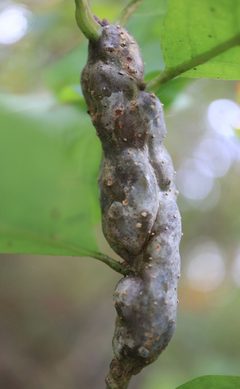
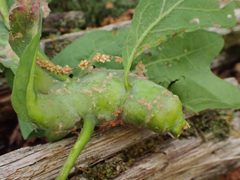
Neuroterus quercusbatatus is a cynipid gall wasp that induces distinctive potato-shaped galls on oak leaves. The exhibits a complex involving alternating between leaf galls and other oak tissues. As a member of the diverse Neuroterus , it contributes to the remarkable gall-forming diversity associated with North American oaks. The species has been documented through hundreds of observations, indicating it is relatively common and widespread in suitable .
Pronunciation
How to pronounce Neuroterus quercusbatatus: /nʊroʊˈtɛrəs kwerˌkʊsbəˈtɑːtəs/
These audio files are automatically generated. While they are not always 100% accurate, they are a good starting point.
Identification
The galls of Neuroterus quercusbatatus are recognized by their distinctive potato-like shape on oak leaves, distinguishing them from other Neuroterus that produce different gall morphologies. The is minute, typical of cynipids, with morphological features requiring microscopic examination for definitive identification. Distinguishing the adult from other Neuroterus species relies on detailed examination of , wing venation, and genitalia. The gall shape serves as the primary field identification character.
Images
Habitat
Associated with oak forests and woodlands, specifically on trees in the Quercus. The requires oak for gall induction and larval development. Specific microhabitat preferences within oak are not well documented.
Distribution
North America; documented across the eastern United States based on iNaturalist observations. The was described by Fitch in 1859, indicating long-recognized presence in the region.
Host Associations
- Quercus - gall Induces galls on oak leaves; specific oak associations require further documentation
Life Cycle
Alternating typical of cynipid gall wasps, with sexual and parthenogenetic phases. The potato-shaped leaf galls contain developing larvae that pupate within the gall structure. Detailed timing of generation alternation and specific developmental stages are not well documented for this .
Ecological Role
As a gall-former, modifies oak leaf tissue to create microhabitats that may support associated . The galls potentially serve as food sources for gall and , though specific ecological interactions for this are not well documented.
Human Relevance
The galls are occasionally encountered by naturalists and collectors as examples of insect-induced plant modifications. The has no documented economic impact on oak health or forestry.
Similar Taxa
- Neuroterus saltatoriusProduces jumping oak galls that detach from leaves and exhibit larval movement causing the gall to 'jump'—distinctly different gall and from the potato galls of N. quercusbatatus
- Other Neuroterus speciesMany produce different gall types (spangle galls, midrib galls, bullet galls) on oaks; accurate identification requires gall and microscopic examination of features