
Dryocosmus dubiosus
Fullaway, 1911
Two-horned Gall Wasp
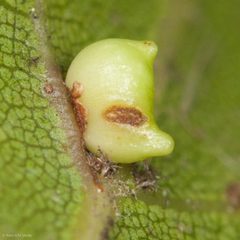
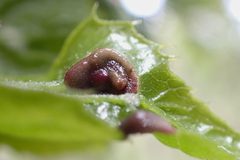
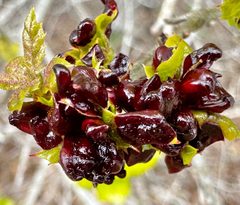
Dryocosmus dubiosus is a cynipid gall wasp to California, North America. It is an abundant that induces distinctive galls on oak trees, specifically on leaves and catkins of coast live oaks and interior live oaks. The species is notable for the horn-like projections on its galls, which give rise to its .
Pronunciation
How to pronounce Dryocosmus dubiosus: //dɹaɪ.oʊˈkɒz.məs duːˈbaɪ.oʊ.səs//
These audio files are automatically generated. While they are not always 100% accurate, they are a good starting point.
Identification
The galls produced by this are characterized by two horn-like projections resembling bull's horns, which distinguish them from other oak galls. The itself is small, as is typical for cynipids. Gall damage from this species has been observed to be confused with fungal oak twig blight and damage from oak twig girdler beetles.
Images
Habitat
Associated with oak woodlands and forests supporting coast live oak (Quercus agrifolia) and interior live oak (Quercus wislizeni).
Distribution
to California, North America.
Host Associations
- coast live oak - gall inductionoviposition on leaves and catkins
- interior live oak - gall inductionoviposition on leaves and catkins
Ecological Role
Induces gall formation on oak trees, potentially affecting leaf and catkin development. The ecological impact of gall induction on has not been quantified.
Human Relevance
Considered a pest of minor concern; damage is primarily cosmetic. Frequently confused with fungal and damage, which may complicate management decisions in ornamental and managed oak settings.
Similar Taxa
- fungi causing oak twig blightGall damage is visually similar and frequently misidentified as fungal
- oak twig girdlers damage resembles gall wasp damage, leading to diagnostic confusion
Misconceptions
Damage from this is often misattributed to fungal or beetles, which may result in inappropriate management responses.
More Details
Taxonomic authority
First described by Fullaway in 1911
Observation frequency
Highly abundant in California with over 2,900 iNaturalist observations documented