
Anacrabronina
Ashmead, 1899
square-headed wasps
Genus Guides
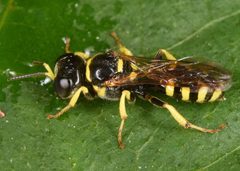
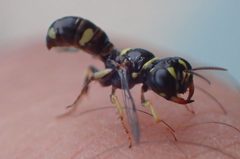
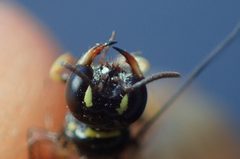
2Anacrabronina is a subtribe of square-headed wasps within the Crabronidae, established by Ashmead in 1899. The subtribe comprises at least 4 and approximately 120 described . Members are solitary characterized by their distinctive square or rectangular shape. The subtribe is part of the tribe Crabronini and Crabroninae.
Pronunciation
How to pronounce Anacrabronina: /ænəkræbroʊˈnaɪnə/
These audio files are automatically generated. While they are not always 100% accurate, they are a good starting point.
Identification
Anacrabronina can be distinguished from other subtribes within Crabronini by the combination of a square or rectangular capsule and specific genitalic characteristics used in higher-level hymenopteran classification. The four constituent (Anacrabro, Encopognathus, Entomocrabro, Entomognathus) share this fundamental head . -level identification requires examination of wing venation, facial markings, and male genitalia.
Images
Distribution
The subtribe has a broad distribution corresponding to that of its constituent , which occur across multiple continents. Specific range data varies by genus; Anacrabro and Entomognathus have documented North American and Palearctic occurrences.
Ecological Role
As members of Crabronidae, within Anacrabronina function as or , contributing to of other arthropods. The subtribe represents a component of solitary diversity within apoid wasp .
Similar Taxa
- Other Crabronini subtribesDistinguished by shape (square/rectangular in Anacrabronina versus other morphologies in subtribes such as Crabronina) and genitalic structure
- LarrinaeAlso contains square-headed wasps but belongs to a different ; differs in wing venation and nesting
More Details
Taxonomic composition
The subtribe contains four : Anacrabro (established 1866), Entomognathus (1844), Encopognathus (1897), and Entomocrabro (1905). The genus Entomognathus is the oldest described and most -rich component.
Nomenclatural history
Authorship is attributed to Ashmead, 1899. The subtribe has been maintained in modern classifications of Crabronidae, with constituent consistently grouped based on morphological synapomorphies.