
Bembicina
Latreille, 1802
sand wasps
Genus Guides
4- Bembix(sand wasps)
- Bicyrtes
- Microbembex(sand wasps)
- Stictia(horse guards)
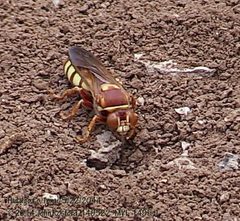
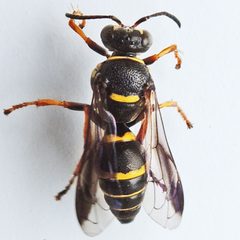
Bembicina is a subtribe of sand wasps within the tribe Bembicini, Crabronidae. Members are characterized by rapid, agile and nesting in sandy substrates. They are predatory that provision nests with paralyzed prey, primarily small flies. The subtribe includes the well-known Bembix, which is common in North America.
Pronunciation
How to pronounce Bembicina: /bɛmˈbɪkɪna/
These audio files are automatically generated. While they are not always 100% accurate, they are a good starting point.
Identification
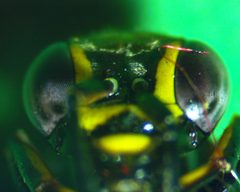
Bembicina can be distinguished from related subtribes by the combination of: elongated, streamlined body form adapted for rapid ; prominent often with green or metallic coloration; and abdominal patterning frequently featuring pale bands or stripes against dark backgrounds. Members lack the dense hair of bees and possess the thread-waisted profile typical of sphecoid .
Images
Habitat
Sandy environments including coastal dunes, riverbanks, and arid inland areas with loose, well-drained soils suitable for nest excavation.
Distribution
Widespread across North America; records span from coastal California (Sonoma County, Fort Bragg, Bodega ) through interior regions. Global distribution includes multiple continents, though precise range boundaries for the subtribe as a whole are not well-documented.
Seasonality
active during warmer months; observed foraging on flowers in spring and summer.
Diet
feed on nectar from flowers including Erigeron glaucus and Eriophyllum staechadifolium. Larvae are provisioned with paralyzed prey, primarily small flies (Diptera).
Life Cycle
Females excavate burrows in sand and provision individual with paralyzed prey items. The larva consumes the provisioned food before pupating within the nest.
Behavior
Rapid, darting patterns described as 'bullet-like.' are solitary nesters. Females hunt actively, capturing prey in flight or from surfaces, then transport it back to the nest. Adults frequently visit flowers for nectar, exhibiting fast, efficient foraging bouts.
Ecological Role
of small flies, contributing to regulation of dipteran . serve as through nectar foraging.
Human Relevance
Generally harmless to humans; stings rare and not considered medically significant. Subject of entomological research; the Bembix within this subtribe has been studied extensively by including Richard Bohart.
Similar Taxa
- Stizina (subtribe)Also within tribe Bembicini, but members typically have different abdominal proportions and nesting ; Stizina includes like Stizus and Bembecinus with somewhat different prey preferences.
- Other CrabronidaeMany sphecoid share general body plan; Bembicina distinguished by sand-nesting specialization, rapid , and specific wing venation patterns.
More Details
Taxonomic Note
The subtribe Bembicina has been historically placed in Bembicidae or Nyssonidae, but current classification places it within Crabronidae Bembicinae. The UCR Entomology Research Museum holds extensive curated collections of this group.
Research History
Bohart and Menke's 1976 monograph 'Sphecid of the World' remains a foundational reference for this group. The subtribe includes diverse such as Bembix, Bicyrtes, Glenostictia, Microbembex, and others.