
Hylaeus nelumbonis
(Robertson, 1890)
Nelumbo Masked Bee
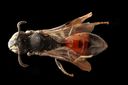
Hylaeus nelumbonis is a of masked ( Colletidae) native to North America. Like other members of the Hylaeus, it is a solitary, nearly hairless bee that resembles small in appearance. The species name "nelumbonis" suggests an association with Nelumbo (lotus), though specific ecological relationships remain poorly documented. As with most Hylaeus species, females transport nectar internally in a crop rather than externally on body hairs.

Pronunciation
How to pronounce Hylaeus nelumbonis: /haɪˈliːəs nɛˈlʊmbənɪs/
These audio files are automatically generated. While they are not always 100% accurate, they are a good starting point.
Identification
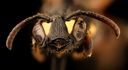
Distinguished from similar small by the presence of (branched) hairs, though this requires magnification of at least 60x to observe. Distinguished from other Hylaeus primarily by facial marking patterns and, in males, extent of pale coloration on the . The specific epithet and known distribution may aid in identification where other Hylaeus species co-occur.
Images
Appearance
Habitat
Specific preferences for this are not well documented. Based on -level characteristics, likely associated with areas providing pre-existing cavities for nesting, including hollow stems, twigs with pith, or abandoned insect burrows. The species name suggests possible association with aquatic or wetland habitats where lotus (Nelumbo) occurs.
Distribution
Recorded from North America, specifically from Vermont, United States. Distribution records are sparse.
Host Associations
- Nelumbo - implied by specific epithet name 'nelumbonis' suggests association with lotus, but this relationship has not been confirmed
Life Cycle
Presumed solitary nesting, consistent with Hylaeus. Females construct individual nests in pre-existing cavities, lining with a secreted organic polymer ('natural plastic'). Each cell contains a single larva provisioned with regurgitated nectar and minimal pollen. Developmental stages likely include , larva, pupa, and , but specific timing unknown.
Behavior
Females forage for nectar, storing it in an internal crop for transport back to the nest. Unlike most bees, pollen collection is minimal; females ingest rather than externally transport pollen. Nesting occurs in pre-existing cavities rather than excavated burrows.
Ecological Role
Likely functions as a , though pollen transport is reduced compared to hairy . Contribution to services is presumed but unquantified.
Similar Taxa
- Hylaeus modestusSimilar -like appearance, facial markings, and nesting ; distinguished by specific facial pattern differences and geographic distribution
- Other Hylaeus speciesNearly identical general ; reliable identification requires examination of facial markings, male genitalia, or geographic context
- Small Crabronidae wasps (e.g., Anacrabro, Ectemnius)Convergent -like appearance with reduced hairiness; distinguished by microscopic examination of hair structure ( in bees, simple in wasps) and wing venation
More Details
Taxonomic Note
The specific epithet 'nelumbonis' (from Nelumbo, lotus) is unusual among North American Hylaeus and may indicate a specialized floral association, though this has not been investigated. Most Hylaeus are foragers.
Data Deficiency
This is poorly represented in collections and literature. The 38 iNaturalist observations suggest it is underreported rather than genuinely rare, but confirmation requires targeted survey work.
Sources and further reading
- BugGuide
- GBIF taxonomy match
- iNaturalist taxon
- Catalogue of Life
- Looking for Cheap Urban Real Estate | Bug Squad
- Bug Eric: Wasp Wednesday: Not Wasp VI
- Bug Eric: A Beautiful Place to "Bee"
- Some Varieties of Annual Flowers Have a Place in Pollinator-Friendly Gardens
- Bug Eric: Wasp Wednesday: Anacrabro ocellatus
- National Meadows Day 2022 in Northern Ireland - Buglife Blog - Buglife