
Hylaeus mesillae
(Cockerell, 1896)
Mesilla Masked Bee
Species Guides
1- Hylaeus mesillae cressoni(Cresson's Masked Bee)
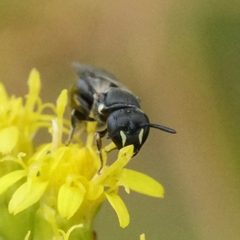
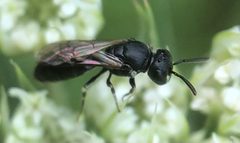
Hylaeus mesillae, commonly known as the Mesilla Masked , is a solitary bee in the Colletidae. It is distributed across Central America and North America. Like other members of the Hylaeus, it is nearly hairless and often mistaken for small . The species was first described by Cockerell in 1896 and includes three recognized .
Pronunciation
How to pronounce Hylaeus mesillae: /hɪˈleɪəs mɛˈsɪlaɪ/
These audio files are automatically generated. While they are not always 100% accurate, they are a good starting point.
Identification
Distinguished from similar and bees by the combination of nearly hairless body and pale facial markings. Separation from other Hylaeus requires examination of specific morphological characters not reliably visible in the field. The (branched) hairs of bees, visible at 60x magnification or higher, separate Hylaeus from wasps which have simple, unbranched hairs.
Images
Habitat
Specific preferences for H. mesillae are not documented. Members of the Hylaeus typically nest in pre-existing cavities including hollow stems, twig pith, abandoned insect burrows in soil, and abandoned galls.
Distribution
Recorded from Central America and North America. GBIF distribution records indicate presence in Middle America and North America.
Life Cycle
Solitary nesting . Females construct individual nests in pre-existing cavities, lining with glandular secretions (natural polymers) to prevent spoilage of stored provisions. Each cell typically contains one larva.
Behavior
Solitary; females forage for nectar and presumably pollen, transporting nectar internally in a crop and regurgitating it at the nest. Pollen transport method for this is not specifically documented but related Hylaeus species carry pollen internally.
Ecological Role
. Specific floral associations for H. mesillae are not documented.
Similar Taxa
- Hylaeus modestusAnother North American masked with similar -like, nearly hairless appearance and pale facial markings; requires detailed morphological examination to distinguish.
- Small wasps (e.g., Crabronidae)Similar size and coloration; have simple unbranched hairs (vs. hairs in bees, requiring magnification to observe) and different (predatory/parasitic vs. pollen/nectar foraging).
More Details
Subspecies
Three are recognized: Hylaeus mesillae mesillae (Cockerell, 1896), Hylaeus mesillae cressoni (Cockerell, 1907), and Hylaeus mesillae cressonii Cockerell, 1907.
Nesting Biology
Based on -level characteristics, Hylaeus readily use artificial nest boxes including bundles of thin straws, sumac twigs, or drilled wooden blocks with small diameter holes.
Sources and further reading
- BugGuide
- Wikipedia
- GBIF taxonomy match
- iNaturalist taxon
- NCBI Taxonomy
- Catalogue of Life
- Looking for Cheap Urban Real Estate | Bug Squad
- Bug Eric: Wasp Wednesday: Not Wasp VI
- Bug Eric: A Beautiful Place to "Bee"
- Some Varieties of Annual Flowers Have a Place in Pollinator-Friendly Gardens
- Bug Eric: Wasp Wednesday: Anacrabro ocellatus
- National Meadows Day 2022 in Northern Ireland - Buglife Blog - Buglife