
Diphaglossinae
Genus Guides
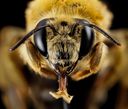
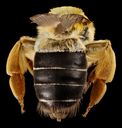
3Diphaglossinae is a of solitary bees in the Colletidae, comprising nine and over 130 described . The group is primarily distributed in the New World, with species found in Argentina, Chile, and other regions of South America. Nesting has been documented for several species, revealing distinctive architectural patterns including vertical with curved necks and main tunnels oriented vertically in soil or horizontally in banks. Some species exhibit gregarious nesting , while others forage in dim light conditions.

Pronunciation
How to pronounce Diphaglossinae: /dɪf.ə.ɡloʊ.saɪˈniː/
These audio files are automatically generated. While they are not always 100% accurate, they are a good starting point.
Identification
Members of Diphaglossinae can be distinguished from other Colletidae by their forked or feathery tongues, a trait reflected in the 'fork- and feather-tongued bees.' Nesting architecture provides additional diagnostic features: are vertically oriented with strongly curved, polished necks, and main tunnels are typically vertical in soil-nesting but horizontal to inclined in bank-nesting species such as Diphaglossa gayi.
Images
Habitat
Nesting occurs primarily in soil substrates, with most excavating vertical burrows in soil surfaces and at least one species (Diphaglossa gayi) nesting in banks. Documented nesting climates range from 8–20°C mean temperature with 250–3000 mm mean annual precipitation. Gregarious nesting has been observed in Cadeguala albopilosa and to a lesser extent in Zikanapis tucumana.
Distribution
New World distribution, with documented records from Argentina and Chile. The includes nine : Cadeguala, Cadegualina, Caupolicana, Crawfordapis, Diphaglossa, Mydrosoma, Mydrosomella, Ptiloglossa, and Ptiloglossidia.
Diet
are flower visitors. Zikanapis tucumana and Ptiloglossa tarsata have been observed visiting Solanum flowers.
Host Associations
- Solanum - flower visitationObserved visitation by Zikanapis tucumana and Ptiloglossa tarsata
Life Cycle
Nests consist of a main tunnel with radially arranged (isolated or paired) connected by lateral tunnels. cells are vertical with curved necks; Cadeguala albopilosa has less curved necks (<90°), while other have highly curved necks (≥90°). Mature larvae spin cocoons; in at least some species, cocoons are coriaceous with three-disk closures. Larval provisions are partly liquid and partly solid. Mature larvae produce clear liquid from at defecation.
Behavior
Foraging varies by : Zikanapis tucumana and possibly Ptiloglossa matutina forage in dim light, while other studied species are . Nest closure methods differ among species: Ptiloglossa tarsata constructs spiral earthen closures plus cotton-like material; Ptiloglossa matutina uses only cotton-like material; other studied species lack closures.
Ecological Role
, with documented flower visitation to Solanum.
Similar Taxa
- ParacolletesShares nesting traits including vertical with curved polished necks and similar larval provisioning; historically considered for placement within Diphaglossinae based on these convergent or shared characteristics.
- Other Colletidae subfamiliesDistinguished by tongue (forked or feathery in Diphaglossinae versus other forms in related groups) and specific nest architecture features such as orientation and neck curvature.
More Details
Nesting architecture variation
closure methods show interspecific variation: Ptiloglossa tarsata has spiral earthen closures plus cotton-like material; Ptiloglossa matutina has cotton-like material only; Cadeguala albopilosa, Diphaglossa gayi, and Zikanapis tucumana lack closures.
Taxonomic note
The Australian Paracolletes crassipes shares multiple nesting traits with New World Diphaglossinae, supporting historical considerations of its placement within this .
Sources and further reading
- BugGuide
- Wikipedia
- iNaturalist taxon
- NCBI Taxonomy
- Catalogue of Life
- Biology and Systematics of the Bee Genus Crawfordapis (Colletidae, Diphaglossinae)
- Nesting biology of the Australian solitary bee Paracolletes crassipes Smith (Hymenoptera: Colletidae) accords with that of the Diphaglossinae
- Nesting behavior and ecological preferences of five Diphaglossinae species (Hymenoptera, Apoidea, Colletidae) from Argentina and Chile
- Early Nesting Biology of the Bee Caupolicana yarrowi (Cresson) (Colletidae: Diphaglossinae) and Its Cleptoparasite Triepeolus grandis (Friese) (Apidae: Nomadinae)
- Figures 19–23 from: Sarzetti L, Genise J, Sanchez M, Farina J, Molina A (2013) Nesting behavior and ecological preferences of five Diphaglossinae species (Hymenoptera, Apoidea, Colletidae) from Argentina and Chile. Journal of Hymenoptera Research 33: 63-82. https://doi.org/10.3897/jhr.33.5061
- Figures 30–37 from: Sarzetti L, Genise J, Sanchez M, Farina J, Molina A (2013) Nesting behavior and ecological preferences of five Diphaglossinae species (Hymenoptera, Apoidea, Colletidae) from Argentina and Chile. Journal of Hymenoptera Research 33: 63-82. https://doi.org/10.3897/jhr.33.5061
- Figures 1–7 from: Sarzetti L, Genise J, Sanchez M, Farina J, Molina A (2013) Nesting behavior and ecological preferences of five Diphaglossinae species (Hymenoptera, Apoidea, Colletidae) from Argentina and Chile. Journal of Hymenoptera Research 33: 63-82. https://doi.org/10.3897/jhr.33.5061
- Figures 8–18 from: Sarzetti L, Genise J, Sanchez M, Farina J, Molina A (2013) Nesting behavior and ecological preferences of five Diphaglossinae species (Hymenoptera, Apoidea, Colletidae) from Argentina and Chile. Journal of Hymenoptera Research 33: 63-82. https://doi.org/10.3897/jhr.33.5061
- Figures 24–29 from: Sarzetti L, Genise J, Sanchez M, Farina J, Molina A (2013) Nesting behavior and ecological preferences of five Diphaglossinae species (Hymenoptera, Apoidea, Colletidae) from Argentina and Chile. Journal of Hymenoptera Research 33: 63-82. https://doi.org/10.3897/jhr.33.5061
- Figures 38–43 from: Sarzetti L, Genise J, Sanchez M, Farina J, Molina A (2013) Nesting behavior and ecological preferences of five Diphaglossinae species (Hymenoptera, Apoidea, Colletidae) from Argentina and Chile. Journal of Hymenoptera Research 33: 63-82. https://doi.org/10.3897/jhr.33.5061