
Hedychridium
Abeille de Perrin, 1878
cuckoo wasps
Species Guides
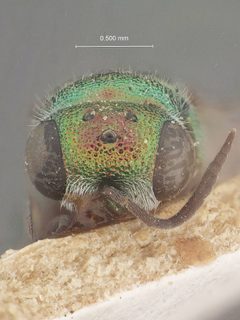
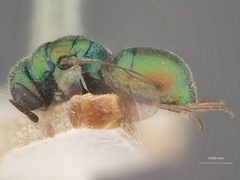
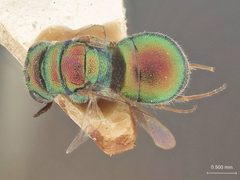
4Hedychridium is a of cuckoo wasps in the Chrysididae, characterized by brilliant metallic coloration in blues, greens, and reds. These small are nest of predatory solitary wasps, with females laying in the nests of . The genus is distributed across the Western Palaearctic, with some species found in North America and isolated records from the Far East. are commonly observed visiting flowers for nectar, particularly plants in the families Apiaceae and Asteraceae.
Pronunciation
How to pronounce Hedychridium: //ˌhɛdɪkˈrɪdiəm//
These audio files are automatically generated. While they are not always 100% accurate, they are a good starting point.
Identification
Members of Hedychridium are distinguished from other chrysidid by their exceptionally vivid metallic coloration, often combining bright blues, greens, and reds. Hedychridium roseum is notable as the only UK Chrysididae with a non-metallic red metasoma contrasting with a metallic blue-green and mesosoma. The genus can be separated from similar cuckoo wasps by the combination of small body size (typically 5–10 mm), compact body form, and intense metallic luster.
Images
Habitat
Dry sandy sites, particularly heathlands and areas with exposed sandy soils suitable for nesting. In Britain, found in suitable sites across the south-east of England.
Distribution
Western Palaearctic with isolated records from the Far East. In North America, present in Canada including records from Ontario (Manitoulin Island) and Vermont, USA. European distribution includes Britain, Scandinavia (Denmark, Norway, Sweden), and continental Europe.
Seasonality
period from late June until late August in temperate regions. Activity patterns likely vary with latitude and local climate conditions.
Diet
visit flowers for nectar, with particular preference for Apiaceae and Asteraceae.
Host Associations
- Astata boops - primary Believed to be primary based on collection context; specimen of H. roseum collected from entrance to A. boops nest
- Tachysphex pompiliformis - possible alternative Listed as possible alternative in literature
Behavior
Nest of solitary predatory . Females locate nests and deposit , with larvae developing as on host provisions. are agile fliers often observed low to the ground in search of host nests or floral resources.
Similar Taxa
- ChrysisOther common cuckoo wasp in same ; distinguished by different body proportions and typically less brilliant or differently patterned coloration
- HedychrumClosely related with similar metallic coloration; separation requires examination of specific morphological characters including punctation and body shape
More Details
Genome sequencing
Hedychridium roseum has been subject to chromosomally complete sequencing, with total length of 174.70 megabases and 19 chromosomal pseudomolecules generated from a female specimen from Buxton Heath, Norfolk, UK.
Biolegacy program
An undescribed species of Hedychridium from Thailand, characterized by brilliant blue and green metallic coloration, is available for naming through the Bohart Museum of Entomology Biolegacy Program.
Sources and further reading
- BugGuide
- Wikipedia
- GBIF taxonomy match
- iNaturalist taxon
- NCBI Taxonomy
- Searching for the Most Unusual Gift? | Bug Squad
- The ants, bees and wasps of Canada, Alaska and Greenland – a checklist of 9250 species | Blog
- Bug Eric: March 2011
- Journal of Hymenoptera Research | Blog - Part 3
- ants | Blog
- wasps | Blog - Part 2
- The genome sequence of a cuckoo wasp, Hedychridium roseum (Rossi, 1790).