
Chrysis conica
Brullé, 1846
Chrysis conica is a of cuckoo wasp in the Chrysididae, first described by Brullé in 1846. Like other members of the Chrysis, it is a that lays its in the nests of other solitary or bees. The larva consumes the 's provisions and developing offspring. are typically metallic in coloration, a characteristic feature of the family.


Pronunciation
How to pronounce Chrysis conica: /ˈkrɪsɪs ˈkɒnɪkə/
These audio files are automatically generated. While they are not always 100% accurate, they are a good starting point.
Identification
Identification to level within Chrysis requires examination of microscopic characters including punctation patterns, abdominal structure, and male genitalia. Chrysis conica can be distinguished from similar species through its specific conical abdominal implied by the species name, though precise diagnostic features would require taxonomic literature. The Chrysis as a whole is recognizable by metallic coloration, compact body, and of investigating holes in wood or other substrates.
Images
Appearance
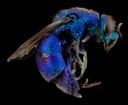
display the metallic coloration typical of Chrysididae, often appearing blue-green or green. The specific epithet 'conica' suggests a conical body shape or abdominal structure, though detailed morphological descriptions for this are limited in the provided sources. Members of the Chrysis generally have a compact, -like body form with a sculptured, pitted .
Habitat
Specific preferences for C. conica are not documented in available sources. Members of the Chrysis are typically found in habitats where their nest, including open woodlands, gardens, and areas with dead wood or other nesting substrates for solitary Hymenoptera.
Distribution
The precise geographic distribution of C. conica is not specified in available sources. The Chrysis has a wide distribution, with many occurring in the Palearctic region. GBIF records indicate observations exist, but specific range boundaries require additional sources.
Diet
feed on nectar and other sugar sources. The larva is a that consumes the provisions (typically paralyzed arthropods) and developing offspring of its or .
Host Associations
- Solitary wasps and bees - Specific records for C. conica are not documented in available sources. Related in the parasitize various solitary Hymenoptera including mason wasps (Eumeninae) and other cavity-nesting species.
Life Cycle
Females locate nests of or bees and deposit inside. The larva hatches and consumes the host's stored provisions and developing larva. occurs within the host's nest . Specific developmental timing for C. conica is not documented.
Behavior
are known to investigate holes in wood and other substrates, prospecting for active nests. When threatened, cuckoo wasps can roll into a ball, using their dense, pitted for protection. They cannot sting.
Ecological Role
As a , C. conica contributes to of its . Cuckoo wasps are part of the complex of insects associated with dead wood and cavity-nesting Hymenoptera.
Human Relevance
No specific human relevance documented. Like other cuckoo wasps, they are not aggressive and cannot sting humans. They may be encountered by observers of solitary and nesting .
Similar Taxa
- Chrysis coerulans species groupSimilar metallic coloration and . The coerulans group contains multiple that are difficult to distinguish without detailed examination.
- Other Chrysis speciesMany Chrysis share metallic coloration and general body form, requiring identification.
- Other Chrysididae generaOther cuckoo wasp such as Hedychrum and Holopyga share similar size, coloration, and habits.
More Details
Taxonomic note
Chrysis conica was described by Brullé in 1846. The Chrysis is one of the largest in Chrysididae and remains taxonomically challenging, with many requiring revision.
Sources and further reading
- BugGuide
- GBIF taxonomy match
- iNaturalist taxon
- Tiger beetles in Argentina’s Chaco forest | Beetles In The Bush
- Pits of despair for ground dwelling insects: Antlions, Family Myrmeleontidae — Bug of the Week
- Bug Eric: Spider Sunday: Trashline Orb Weavers
- Bug Eric: Wasp vs. Wasp
- Bug Eric: The Wasp Wall
- Bees vs wasps: what's the difference? - Buglife Blog - Buglife