
Anisepyris
Kieffer, 1905
Species Guides
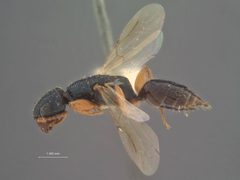
2Anisepyris is a of flat wasps in the Bethylidae, Epyrinae. The genus contains 13 recognized -groups and is primarily distributed in the Neotropical region with limited representation in the Nearctic. A recent phylogenetic analysis based on 120 morphological characters across 72 operational taxonomic units resolved well-supported relationships among species and identified key synapomorphies. The genus is hypothesized to have a relatively recent origin, with historical patterns linked to dense forest .
Pronunciation
How to pronounce Anisepyris: /ˌænɪˈsɛpərɪs/
These audio files are automatically generated. While they are not always 100% accurate, they are a good starting point.
Identification
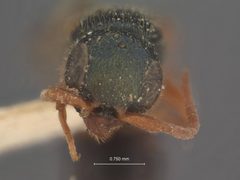
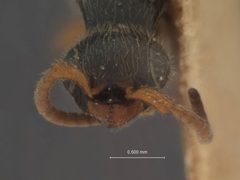
Members of Anisepyris can be distinguished from related bethylid by diagnostic morphological features, particularly: shape, configuration of the pronotal area , and mesopleural foveae. These characters form the basis for the 13 -group classifications established by Barbosa and Azevedo (2018).
Images
Habitat
Dense forest areas. The phylogenetic study suggests historical and diversification of the has been primarily associated with forested environments.
Distribution
Mainly Neotropical region, with few extending into the Nearctic region.
Similar Taxa
- Other Bethylidae generaAnisepyris shares the general 'flat wasp' body plan with other bethylids but differs in specific mandibular and thoracic characters, particularly the pronotal area and mesopleural foveae .
More Details
Phylogenetic context
The has been subject to formal cladistic analysis using 120 morphological characters, representing one of the more thoroughly studied bethylid genera from a phylogenetic perspective. The analysis supported the monophyly of -groups and revealed patterns of character evolution.
Species diversity
The is organized into 13 -groups as defined by Barbosa and Azevedo (2018), with diagnostic characters scrutinized in subsequent phylogenetic work.