
Miscogastrinae
Walker, 1833
Genus Guides
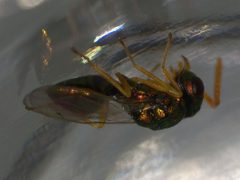
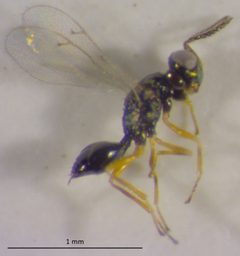
2Miscogastrinae is a of small within the Pteromalidae. Members are morphologically diverse, with approximately 90 described worldwide. The group has undergone significant taxonomic revision, with many former genera reclassified into other subfamilies based on phylogenetic studies. Most are parasitoids of other insects, though specific associations remain incompletely documented for many .
Pronunciation
How to pronounce Miscogastrinae: //ˌmɪskoʊˈɡæstrɪniː//
These audio files are automatically generated. While they are not always 100% accurate, they are a good starting point.
Identification
Miscogastrinae is distinguished from other pteromalid primarily by combinations of antennal and mesosomal characters, including specific arrangements of flagellomeres and details of the mesopleuron and propodeum. The subfamily lacks the distinct synapomorphies that characterize Pteromalinae or Ceinae. Accurate identification to subfamily level usually requires microscopic examination of cleared specimens and reference to specialized taxonomic keys.
Images
Distribution
distribution with recorded from all major biogeographic regions. Highest diversity occurs in temperate and tropical zones.
Ecological Role
; members are presumed to contribute to of their , though quantitative ecological studies are limited.
Similar Taxa
- PteromalinaeOverlaps in general body form and size; distinguished by differences in antennal structure, particularly the number and proportions of funicular segments, and details of the propodeal position.
- CeinaeFormerly included within Miscogastrinae; separated based on derived characters of the mesosoma and differences in antennal club formation.
More Details
Taxonomic instability
The circumscription of Miscogastrinae has changed substantially following molecular phylogenetic studies. Several formerly placed here have been transferred to newly recognized or redefined , including Macromesinae and others. Current classification follows Burks et al. (2011) and subsequent revisions.
Morphological diversity
The encompasses substantial morphological variation, including both robust and slender body forms, and ranging from 11- to 13-segmented. This diversity has historically complicated subfamily-level classification.