
Euperilampus triangularis
(Say, 1829)
Euperilampus triangularis is a of chalcid in the Perilampidae, first described by Thomas Say in 1829. It belongs to a group of wasps characterized by their metallic coloration and compact body form. The species has been recorded across multiple North American jurisdictions including Colorado, Florida, Indiana, Kansas, and Ontario.
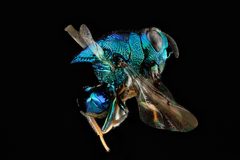
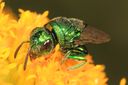
Pronunciation
How to pronounce Euperilampus triangularis: //juːˌpɛrɪˈlæmpəs traɪˌæŋɡjʊˈlɛərɪs//
These audio files are automatically generated. While they are not always 100% accurate, they are a good starting point.
Images
Distribution
Recorded from Colorado, Florida, Indiana, Kansas, and Ontario in North America.
Host Associations
- Hydrophilus triangularis - hyperparasitoidHas been observed emerging from of this giant water scavenger beetle (Hydrophilidae). This represents a hyperparasitoid relationship, as Perilampidae are known to parasitize other .
Ecological Role
Hyperparasitoid; contributes to of aquatic and potentially their associated primary .
Similar Taxa
- Other PerilampidaeMembers of this share metallic coloration, compact bodies, and reduced wing venation. Specific identification of E. triangularis requires examination of antennal structure and mesosomal sculpturing.
More Details
Taxonomic history
Originally described as Perilampus triangularis by Say in 1829, later transferred to the Euperilampus.
Collection frequency
The has accumulated 257 observations on iNaturalist, suggesting it is encountered with moderate frequency by naturalists, though this may reflect survey effort rather than true abundance.