
Axima
Walker, 1862
Species Guides
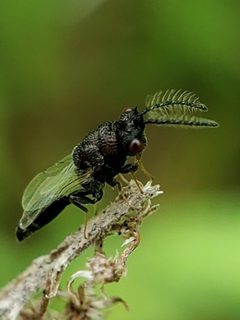
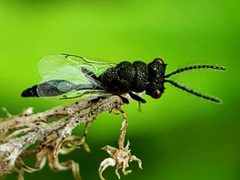
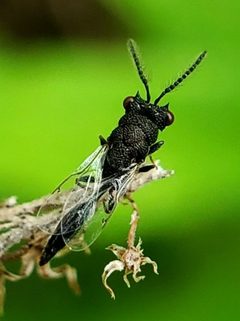
1Axima is a small of chalcidoid wasps in the Eurytomidae, exclusive to the Western Hemisphere. Some possess highly distinctive stalked , a morphological feature rare among chalcidoids. The genus includes at least three stalk-eyed species, with Axima sidi described from Colombia. has been documented for only one species, which is a primary of dwarf carpenter bees (Ceratina).
Pronunciation
How to pronounce Axima: /ˈæk.sɪ.mə/
These audio files are automatically generated. While they are not always 100% accurate, they are a good starting point.
Identification
Stalk-eyed of Axima can be recognized by their elongated stalks—extensions of the that position the at the end of slender projections. A key to stalk-eyed Axima species has been published to facilitate identification. Non-stalk-eyed species lack this dramatic modification and require examination of standard chalcidoid morphological characters.
Images
Habitat
Associated with plant stems containing soft pith, based on the nesting of known .
Distribution
Western Hemisphere; Colombia (for A. sidi).
Host Associations
- Ceratina - Dwarf carpenter bees (Apidae: Xylocopinae). Primary relationship documented for only one of Axima.
Life Cycle
Primary . Develops within , with emerging from plant stems.
Ecological Role
Similar Taxa
- Other EurytomidaeAxima with stalked are morphologically distinctive within the ; most eurytomids lack such extreme eye modifications.
- Other chalcidoid generaStalked are rare in Chalcidoidea, making stalk-eyed Axima readily distinguishable from the vast majority of chalcid wasps.
More Details
Stalked eye function
A hypothesis proposes that stalked function as devices to assist in escaping from enclosed within the soft pith of plant stems. This remains speculative and has not been experimentally confirmed.