
Eurytominae
Walker, 1832
Genus Guides
10Eurytominae is a of chalcidoid wasps within the Eurytomidae, first described by Walker in 1832. Members are generally small, robust-bodied with reduced wing venation. The subfamily contains numerous and that are primarily associated with plant-feeding or parasitoid , often attacking concealed such as gall-forming insects or developing seeds.
Pronunciation
How to pronounce Eurytominae: /ˌjʊrɪˈtɒmɪniː/
These audio files are automatically generated. While they are not always 100% accurate, they are a good starting point.
Identification
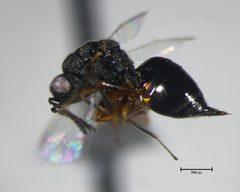
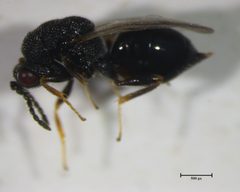
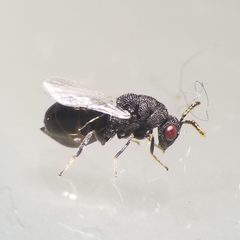
Eurytominae can be distinguished from other eurytomid by a combination of morphological features including a relatively compact, often stocky body form, short with a reduced number of flagellomeres, and forewings with simplified venation that lacks a closed marginal . The pronotum is usually short and does not extend to the tegulae. These features separate them from the smaller subfamily Rileyinae, which often has more elongate bodies and different antennal proportions.
Images
Distribution
Eurytominae has a worldwide distribution, with recorded across all major biogeographic regions including the Nearctic, Palearctic, Neotropical, Afrotropical, Oriental, and Australasian realms. Individual species ranges vary considerably, with some showing broad distributions while others appear restricted to specific regions or -associated .
Ecological Role
Eurytominae function primarily as or phytophages. Many are parasitoids of gall-forming insects (Cecidomyiidae, Cynipidae) or other endophytic herbivores, while others are seed feeders that develop within developing plant seeds. A smaller number are known to be primary parasitoids of Lepidoptera or Coleoptera larvae. These roles contribute to of herbivorous insects and influence plant reproductive success through seed or indirect effects on gall-former .
Human Relevance
Some Eurytominae are economically significant as pests of cereal crops, particularly as seed feeders in grasses and grains. Conversely, others have been investigated for potential against pest gall midges and other agricultural pests. The has limited direct cultural significance but is occasionally encountered in agricultural entomology and biodiversity surveys.
Similar Taxa
- RileyinaeRileyinae is the other major of Eurytomidae. Eurytominae differs in having a more robust body, shorter with fewer segments, and forewings with reduced venation lacking a closed marginal . Rileyinae tend to be more slender with proportionally longer antennae.
More Details
Taxonomic history
Eurytominae has historically served as the primary grouping for most eurytomid , with Rileyinae established more recently to accommodate distinctive lineages formerly included within Eurytominae. The classification of Eurytomidae remains under study, with some authors questioning the monophyly of current subfamily boundaries.
Host diversity
Eurytominae exhibits exceptional diversity in associations compared to many other chalcidoid groups, spanning multiple insect orders and including both and phytophagous feeding strategies. This versatility has complicated ecological generalizations about the .