
Eucharitinae
Walker, 1846
Genus Guides
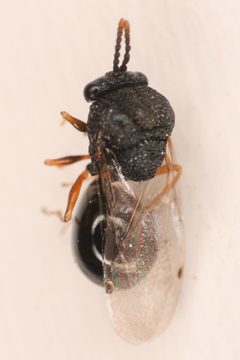
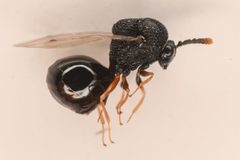
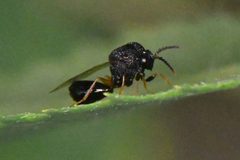
4Eucharitinae is a of chalcid wasps within Eucharitidae, established by Walker in 1846. Members are of ants, with larvae developing inside colonies after being transported by ants. The subfamily is distinguished by specialized adaptations involving ant exploitation.
Pronunciation
How to pronounce Eucharitinae: /ˌjuːkəˈrɪtɪnaɪ/
These audio files are automatically generated. While they are not always 100% accurate, they are a good starting point.
Identification
Distinguished from other Eucharitidae by -specific and associated morphological adaptations for phoretic transport by ants. typically have reduced wing venation and body structures adapted for brief adult life spans.
Images
Habitat
Found in environments supporting colonies, including forests, woodlands, and other terrestrial where Formicidae are abundant. Distribution closely tracks that of host ant .
Distribution
Widespread in tropical and temperate regions globally; present on multiple continents where suitable occur. Specific range boundaries depend on host ant distributions.
Seasonality
timed to coincide with activity periods of colonies; often observed during warm months when ant colonies are active and producing .
Host Associations
- Formicidae - Larvae are of pupae; first instar larvae attach to foraging ants and are carried into nests
Life Cycle
Females deposit on or near vegetation. First instar larvae () actively seek and attach to passing ants, which transport them into the nest. Larvae then transfer to and develop as internal of ant pupae. emerge from ant nests, mate, and females oviposit without feeding.
Behavior
First instar larvae exhibit specialized phoretic , actively seeking . are short-lived and do not feed; their behavior is limited to mating and locating oviposition sites near ant foraging trails.
Ecological Role
Acts as a control agent for ants, potentially influencing colony dynamics and structure. Represents a specialized consumer within ant-dominated .
Human Relevance
No direct economic importance; occasionally encountered in biodiversity surveys and ecological studies. Serves as a model system for studying - and social insect .
Similar Taxa
- OraseminaeOther Eucharitidae with similar - ; distinguished by ant specificity and subtle morphological differences in structure
- KapalaFormerly placed in Eucharitinae but now often treated as separate lineage; differs in associations and larval
More Details
Phoretic Adaptations
The planidial larval stage represents a remarkable evolutionary convergence with other - lineages, involving loss of larval feeding structures and development of sensory and ambulatory adaptations for location.
Taxonomic History
Walker established the in 1846 based on the Eucharissa; modern classifications recognize multiple genera within Eucharitinae, though generic boundaries remain under study.