
Homalotylus
Mayr, 1876
Homalotylus is a of in the Encyrtidae, first described by Mayr in 1876. The genus comprises solitary or gregarious larval parasitoids of lady beetles (Coleoptera: Coccinellidae), which are of hemipterans including aphids, scale insects, and psyllids. have been documented from the Palaearctic, New World, and Oriental regions, with recent descriptions of new species from China and records from Brazil and Iran.
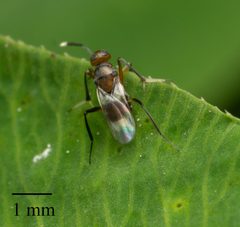
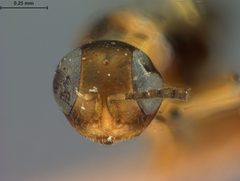

Pronunciation
How to pronounce Homalotylus: /həˌmæloʊˈtaɪləs/
These audio files are automatically generated. While they are not always 100% accurate, they are a good starting point.
Identification
Identification relies on morphological examination of females; a key to Chinese based on female characters has been published. The can be distinguished from other Encyrtidae by its association with coccinellid and specific morphological traits detailed in taxonomic revisions.
Images
Habitat
include university campuses, agricultural areas, and natural vegetation where coccinellids and their sternorrhynchan prey occur. Specimens have been collected using at elevations ranging from approximately 13 m to 24 m in China.
Distribution
Palaearctic region (including China, Iran, and Europe), New World (including Brazil and Mexico), and Oriental region. Documented from China (Tianjin, Guangxi), Iran, Brazil, and Mexico.
Host Associations
- Coccinellidae - larval Solitary or gregarious of lady beetle larvae; emerges from prepupal stage
- Aphidoidea - indirectPrey of coccinellids
- Coccoidea - indirectPrey of coccinellids
- Psylloidea - indirectPrey of coccinellids
- Cycloneda sanguinea - Documented for H. hemipterinus in Brazil
- Nephus bipunctatus - Documented for H. sinensis in Iran
Life Cycle
Solitary or gregarious larval development within coccinellid . Parasitoids emerge from the prepupal stage of the host. Oviposition and development have been studied in relation to host stage for at least one .
Ecological Role
agent; acts as a tertiary that regulates of coccinellids, which are important of agricultural and forest pests including aphids, scale insects, and psyllids.
Human Relevance
Potential importance in programs, though their of beneficial lady beetles may complicate efforts. records have been clarified to correct erroneous literature attributing direct parasitism of scale insects.
Similar Taxa
- Other Encyrtidae generaRequires morphological examination and association data for differentiation; Homalotylus specifically associated with Coccinellidae larvae
Misconceptions
Historical literature has incorrectly recorded scale insects (Coccoidea), Chrysomelidae, Bruchidae, and Gelechiidae as direct . These records are considered erroneous; the is exclusively associated with Coccinellidae as primary hosts.
More Details
Taxonomic history
The has undergone taxonomic revision, with three new described from China in 2023 (H. tianjinensis, H. bicolor, H. guangxiensis) and new distributional records established for previously described species.
Host record reliability
Per Noyes 2010, records of scale insects as direct hosts are considered incorrect. Records of Chrysomelidae, Bruchidae, and Gelechiidae are also probably erroneous. Host associations should be verified through direct observation of from coccinellid hosts.
Sources and further reading
- BugGuide
- GBIF taxonomy match
- iNaturalist taxon
- NCBI Taxonomy
- Catalogue of Life
- homalotylus_shuvakhinae_trjapitzin_triapitsyn_holotype_female_ucrc-ent_159673_lateral.jpg | Entomology Research Museum
- Encyrtid Holdings | Entomology Research Museum
- Primary Type List | Entomology Research Museum
- Publications | Entomology Research Museum
- New Host Records of the Ladybeetle Parasitoid species Homalotylus sinensis in Iran (Hymenoptera: Encyrtidae)
- Description of three new species and new distributional data for three species of Homalotylus (Hymenoptera, Encyrtidae) from China
- Cycloneda sanguinea(L.) (Coleoptera: Coccinellidae) is a Host forHomalotylus hemipterinus(De Stefani) (Hymenoptera: Encyrtidae) in Brazil
- Oviposition and development of the gregarious parasitoid Homalotylus eytelweinii (Hymenoptera: Encyrtidae) in relation to host stage of predaceous ladybirds
- Figures 38-43 from: Zu G, Xue H, Wang H, Zhen W, Huang D (2023) Description of three new species and new distributional data for three species of Homalotylus (Hymenoptera, Encyrtidae) from China. ZooKeys 1184: 273-289. https://doi.org/10.3897/zookeys.1184.113292
- Figures 1-6 from: Zu G, Xue H, Wang H, Zhen W, Huang D (2023) Description of three new species and new distributional data for three species of Homalotylus (Hymenoptera, Encyrtidae) from China. ZooKeys 1184: 273-289. https://doi.org/10.3897/zookeys.1184.113292
- Figures 44-49 from: Zu G, Xue H, Wang H, Zhen W, Huang D (2023) Description of three new species and new distributional data for three species of Homalotylus (Hymenoptera, Encyrtidae) from China. ZooKeys 1184: 273-289. https://doi.org/10.3897/zookeys.1184.113292
- Figures 7-12 from: Zu G, Xue H, Wang H, Zhen W, Huang D (2023) Description of three new species and new distributional data for three species of Homalotylus (Hymenoptera, Encyrtidae) from China. ZooKeys 1184: 273-289. https://doi.org/10.3897/zookeys.1184.113292
- Figures 19-25 from: Zu G, Xue H, Wang H, Zhen W, Huang D (2023) Description of three new species and new distributional data for three species of Homalotylus (Hymenoptera, Encyrtidae) from China. ZooKeys 1184: 273-289. https://doi.org/10.3897/zookeys.1184.113292
- Figures 26-31 from: Zu G, Xue H, Wang H, Zhen W, Huang D (2023) Description of three new species and new distributional data for three species of Homalotylus (Hymenoptera, Encyrtidae) from China. ZooKeys 1184: 273-289. https://doi.org/10.3897/zookeys.1184.113292
- Figures 13-18 from: Zu G, Xue H, Wang H, Zhen W, Huang D (2023) Description of three new species and new distributional data for three species of Homalotylus (Hymenoptera, Encyrtidae) from China. ZooKeys 1184: 273-289. https://doi.org/10.3897/zookeys.1184.113292
- Figures 32-37 from: Zu G, Xue H, Wang H, Zhen W, Huang D (2023) Description of three new species and new distributional data for three species of Homalotylus (Hymenoptera, Encyrtidae) from China. ZooKeys 1184: 273-289. https://doi.org/10.3897/zookeys.1184.113292