
Haltichella rhyacioniae
Gahan, 1927
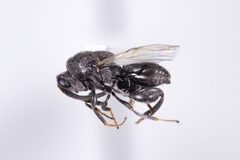
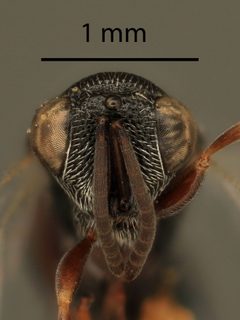
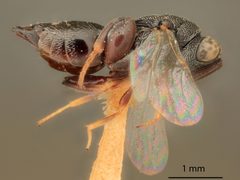
Haltichella rhyacioniae is a of chalcid in the Chalcididae, described by Gahan in 1927. The species epithet "rhyacioniae" indicates an association with of the Rhyacionia (pine tip moths), suggesting it is likely a of these . It belongs to the Haltichellinae, a group characterized by distinctive morphological features including modified hind legs. Records indicate presence in multiple U.S. states.
Pronunciation
How to pronounce Haltichella rhyacioniae: /hælˈtɪkɛlə ˌraɪəˈkoʊni.aɪ/
These audio files are automatically generated. While they are not always 100% accurate, they are a good starting point.
Identification
As a member of Haltichellinae, this possesses the 's diagnostic trait: enlarged, modified hind with serrations or teeth on the inner margin. Within Haltichella, species identification requires examination of specific characters including antennal structure, mesosomal , and wing venation patterns. Differentiation from congeneric species depends on subtle morphological details of the propodeum and petiole structure.
Images
Distribution
Recorded from California, Georgia, Maryland, Massachusetts, and Missouri in the United States. The geographic spread across diverse regions suggests broad adaptability within temperate North America.
Host Associations
- Rhyacionia - probable The epithet 'rhyacioniae' strongly indicates association with this of pine tip moths (Tortricidae), likely as a
Ecological Role
Presumed , potentially contributing to of Rhyacionia in coniferous forest .
Human Relevance
If confirmed as a of Rhyacionia , this may have incidental relevance to forestry. Rhyacionia are significant pests of pine plantations; natural enemies like H. rhyacioniae could contribute to , though no documented applications exist.
Similar Taxa
- Haltichella serrataCongeneric sharing modified hind characteristic of Haltichellinae; distinguished by specific antennal and sculptural details
- Other Chalcididae generaLack the enlarged, toothed hind that define Haltichellinae; Haltichella specifically has distinctive propodeal structure
More Details
Taxonomic note
The epithet 'rhyacioniae' follows a common naming convention indicating association. This naming practice, established by Gahan in 1927, provides strong but not definitive evidence of biological relationship pending modern host verification.
Data limitations
This is represented by minimal observation records (1 iNaturalist observation) and lacks modern taxonomic revision or confirmation studies.