
Brachymeriinae
Mani, 1938
Genus Guides
1- Brachymeria(chalcid wasps)
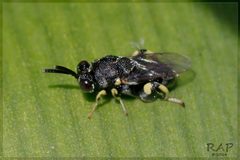
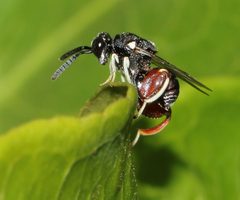
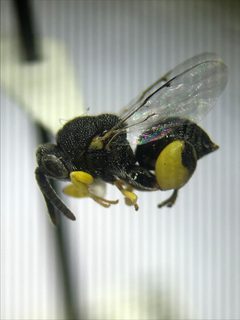
Brachymeriinae is a of chalcidid wasps (Chalcididae) established by Mani in 1938. Members are primarily pupal of various insects. Some are characterized by females having an elongate syntergum, referred to as 'long tailed' species. The subfamily includes economically important species used in of agricultural pests.
Pronunciation
How to pronounce Brachymeriinae: /bræ.kɪˈmɛr.i.aɪ.neɪ/
These audio files are automatically generated. While they are not always 100% accurate, they are a good starting point.
Identification
Females of some possess a conspicuously elongate syntergum, creating a 'long tailed' appearance. Species in the subconica group have a transverse carina across the vertex of the ocellus; species lacking this carina are excluded from this group.
Images
Habitat
Diverse including agricultural , particularly rice fields. Some have been collected near ground-nesting tunnels.
Distribution
distribution including Neotropical region (Trinidad), India, and southern India.
Host Associations
- Cnaphalocrocis medinalis (rice leaf folder) - pupal Brachymeria swaminathani sp. nov.
- unidentified Bembix (Crabronidae) larva - possible Tentative association for B. trinidadensis based on collection proximity; was feeding on unidentified Tabanidae
Life Cycle
Pupal . Development occurs within pupae.
Ecological Role
agent of agricultural pests, particularly in rice .
Human Relevance
Used as agents for crop pests. Some appear to be accidentally introduced to new regions through human activity.
Similar Taxa
- Other Chalcididae subfamiliesBrachymeriinae distinguished by pupal and specific morphological characters such as syntergum structure in females
More Details
Taxonomic notes
The subconica group has been redefined; B. trinidadensis and B. laetiliae were removed based on absence of the transverse carina on the vertex.
Sources and further reading
- BugGuide
- iNaturalist taxon
- NCBI Taxonomy
- Catalogue of Life
- First discovery of the Neotropical species Brachymeria trinidadensis (Hymenoptera: Chalcididae, Brachymeriinae) in India
- Brachymeria swaminathani sp. nov. (Hymenoptera, Chalcididae, Brachymeriinae) a new pupal parasitoid of rice leaf folder from southern India