
Aprosthema brunniventre
Aprosthema brunniventre is a of in the Argidae. Members of this are characterized by their distinctive within the family. The species name 'brunniventre' refers to the brownish coloration of the . Like other Argidae, it belongs to a family of herbivorous sawflies whose larvae feed on various plant species.
Pronunciation
How to pronounce Aprosthema brunniventre: /əˈprɒstəmə ˌbrʌnɪˈvɛntri/
These audio files are automatically generated. While they are not always 100% accurate, they are a good starting point.
Identification
Distinguished from other Argidae by combination of abdominal coloration (brown surface) and presumably other subtle morphological features of the Aprosthema. Separation from requires examination of specific diagnostic characters such as saw structure, wing venation details, and body proportions; precise distinguishing features for this specifically are not well documented in accessible literature.
Images
Appearance
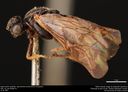
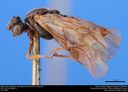
exhibit the typical Argidae body plan with a broad connection between and (lacking the narrow ' waist' of many other Hymenoptera). The name 'brunniventre' (brown-bellied) indicates brownish abdominal coloration. are simple, not elbowed or clubbed. Wings are membranous with reduced venation characteristic of the .
Distribution
Specific geographic range is poorly documented due to limited observations (only 2 records in iNaturalist). The Aprosthema has a Palearctic distribution, suggesting this likely occurs in Europe or adjacent regions.
Similar Taxa
- Other Aprosthema speciesCongeneric share the general body plan and require detailed morphological examination to distinguish; specific differentiating characters for A. brunniventre versus are not readily available in standard references.
- Other Argidae generaBroad - connection and simple are -level traits; -level separation relies on more subtle characters including antennal segmentation, wing venation, and genitalic structures.
More Details
Data scarcity
This is represented by only 2 observations in iNaturalist, indicating it is either genuinely rare, undercollected, or identification to this species level is challenging and rarely attempted. The limited observational record precludes confident statements about , distribution, or .