
Ceratina nanula
Cockerell, 1897
Tiny Small carpenter, dwarf ceratina
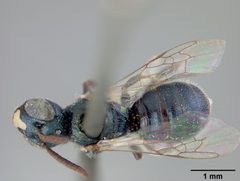
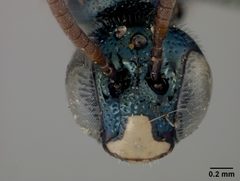
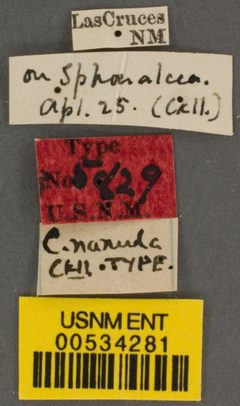
Ceratina nanula is a of small carpenter bee in the Apidae, described by Cockerell in 1897. It is one of the smallest members of the Ceratina, commonly known as the "dwarf ceratina" or "tiny small carpenter." The species has been documented in Central America and North America. Like other Ceratina species, it is a solitary that nests in pithy or hollow plant stems.
Pronunciation
How to pronounce Ceratina nanula: //kɛˈratɪnə næˈnjuːlə//
These audio files are automatically generated. While they are not always 100% accurate, they are a good starting point.
Identification
Ceratina nanula can be distinguished from other Ceratina by its notably small size, consistent with its specific epithet "nanula" (diminutive). Identification to species level requires examination of morphological details such as body proportions, punctation patterns on the , and genitalic structures. It lacks the metallic coloration intensity seen in some larger .
Images
Habitat
Found in environments where suitable nesting substrates occur: pithy-stemmed plants, hollow twigs, and similar cavities. The has been observed in prairie and open in North America.
Distribution
Documented from Central America and North America. GBIF records indicate presence in Middle America and North America.
Diet
pollen and nectar forager. Observed visiting flowers of Penstemon digitalis, Monarda fistulosa, and Eryngium yuccifolium in prairie studies.
Life Cycle
Solitary nesting in pithy plant stems. Females construct linear series of within hollow stems, provisioning each with pollen and nectar before laying . No ; offspring emerge and disperse independently.
Behavior
Foraging varies by flower : when visiting Penstemon digitalis or Monarda fistulosa, tends to visit isolated flowers or shows no patch preference; when visiting Eryngium yuccifolium, shows preference for denser flower patches. This context-dependent foraging pattern may reduce competitive overlap with larger social bees such as Bombus.
Ecological Role
of native flowering plants in prairie and open . Contributes to wild diversity in agricultural and natural landscapes. Its small size and flexible foraging strategy may allow coexistence with larger, more competitive bee .
Human Relevance
Part of the wild providing services including crop pollination. Included in global studies demonstrating that wild bee communities contribute substantial economic value to agriculture, though individual small carpenter bee contribute proportionally less than crop visitors.
Similar Taxa
- Other Ceratina speciesLarger body size and more extensive metallic coloration in most ; C. nanula distinguished by diminutive stature
- Lasioglossum (sweat bees)Similar small size and solitary nesting, but Lasioglossum typically nest in soil rather than stems and have different wing venation
- Bombus (bumble bees)Much larger, social, with dense hair; C. nanula avoids direct competition by utilizing different foraging strategies and flower patches
More Details
Conservation context
As a member of the Ceratina, C. nanula represents the type of small, non- wild whose conservation requires arguments beyond direct economic services. Global studies indicate that while 2% of wild bee species provide 80% of crop pollination, maintaining diverse bee including small carpenter bees supports ecosystem stability and functioning.
Research significance
Documented in studies examining how foraging preferences for flower patch vary by both and flower identity, contributing to understanding of pollinator coexistence mechanisms.