
Nomada gutierreziae
Cockerell, 1896
Nomada gutierreziae is a of cuckoo bee in the Apidae, first described by Cockerell in 1896. As a member of the Nomada, it exhibits kleptoparasitic , laying in the nests of species rather than constructing its own nests. The species is known from Middle and North America. Like other Nomada species, females likely locate host nests using chemical cues. Males of the genus have been observed to engage in "antennal grabbing" during copulation, a behavior involving the winding of around the female's antennae to transfer , though this specific behavior has not been directly documented for N. gutierreziae.
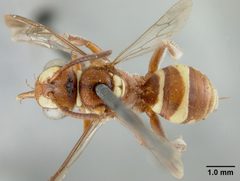
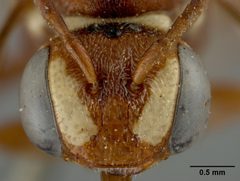
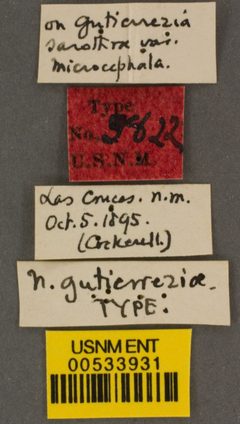
Pronunciation
How to pronounce Nomada gutierreziae: //noʊˈmædə ˌɡuːtjəˈrɛzi.eɪ//
These audio files are automatically generated. While they are not always 100% accurate, they are a good starting point.
Images
Distribution
Middle America and North America. GBIF records indicate presence in both regions, with specific distribution details limited.
Ecological Role
Kleptoparasite (cuckoo bee) that exploits nests of other . As a nest , it reduces the reproductive success of its species while occupying a specialized in bee .
Similar Taxa
- Nomada flavoguttataBoth are congeneric cuckoo bees with similar kleptoparasitic ; N. flavoguttata has been directly studied for mating including antennal grabbing
- Other Nomada speciesShare the -level trait of kleptoparasitism and -like appearance due to reduced branched hairs; identification to level requires detailed examination
More Details
Taxonomic note
The specific epithet 'gutierreziae' likely honors an individual with the surname Gutierrez, though the exact etymology is not documented in available sources.
Data limitations
This has only 4 observations recorded on iNaturalist as of the knowledge cutoff, indicating it is rarely encountered or underreported.
Sources and further reading
- BugGuide
- GBIF taxonomy match
- iNaturalist taxon
- NCBI Taxonomy
- Catalogue of Life
- Image by UC Davis Alumnus Ian Wright Appears in ESA World Calendar | Bug Squad
- entomology | Blog - Part 10
- Northern Ireland, invertebrate finds in review 2023 - Buglife Blog - Buglife
- Not-so Solitary Bees - Buglife Blog - Buglife
- Bare ground experiments to help save rare bees and wasps - Buglife Blog - Buglife
- behaviour | Blog