
Brachymelecta californica
(Cresson, 1878)
California Digger-cuckoo Bee
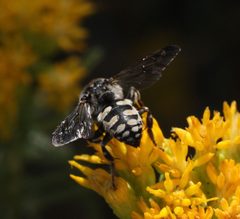
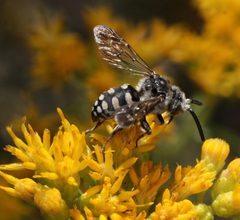
Brachymelecta californica, the California digger-cuckoo bee, is a cleptoparasitic in the Apidae. As a cuckoo bee, it does not construct its own nests or collect pollen, but instead lays in the nests of bees, primarily species of Anthophora. The species is native to western North America and has been documented across a broad geographic range including California and adjacent regions.
Pronunciation
How to pronounce Brachymelecta californica: /ˌbrækɪˈmɛlɛktə ˌkælɪˈfɔrnɪkə/
These audio files are automatically generated. While they are not always 100% accurate, they are a good starting point.
Identification
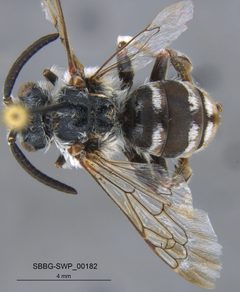
Brachymelecta californica can be distinguished from other melectine bees by its relatively large size and robust build compared to related . The genus Brachymelecta is characterized by a shortened marginal in the forewing and reduced wing venation compared to Melecta. Identification to level requires examination of morphological details including facial markings, patterns, and male genitalia. The species may be confused with Melecta species, from which it differs in wing venation and overall body proportions.
Images
Habitat
Found in a variety of open including chaparral, coastal scrub, grasslands, and desert edges. Associated with areas where bees (Anthophora ) nest, typically in ground-nesting or eroding banks with suitable soil substrates for excavation.
Distribution
Western North America, primarily in California and adjacent regions of Oregon, Nevada, Arizona, and Baja California. Records extend into the southwestern United States and northern Mexico. The has been documented across diverse elevations from coastal areas to montane regions.
Seasonality
are active primarily from spring through summer, with peak activity coinciding with the periods of Anthophora . Activity patterns vary geographically and elevationally across its range.
Host Associations
- Anthophora - kleptoparasitePrimary ; B. californica lays in nests provisioned by Anthophora females
Life Cycle
As a cleptoparasitic , females enter nests and deposit in provisioned by the host. Larvae consume the host's pollen and nectar stores and typically kill the host egg or larva. Development occurs within the host cell, with emerging to mate and seek new host nests.
Behavior
Females exhibit nest-searching , flying low over ground and investigating potential nest entrances. Males patrol territories and may be observed hovering near flowering plants or host nesting . The does not collect pollen or nectar for provisioning; visit flowers primarily for nectar consumption.
Ecological Role
Acts as a regulator of through . Contributes to bee dynamics and may influence nesting and defensive strategies of host species. nectar feeding contributes to pollination, though less effectively than pollen-collecting bees.
Human Relevance
Of minor direct economic importance. May be encountered by researchers and surveyors. Like many native bees, potentially affected by loss, exposure, and competition from managed honey bees, though specific impacts have not been quantified.
Similar Taxa
- MelectaSimilar large, robust cleptoparasitic bees with overlapping geographic ranges; distinguished by wing venation (shortened marginal in Brachymelecta) and body proportions
- XeromelectaRelated cleptoparasitic with similar ; differs in morphological details of wing venation and male genitalia
More Details
Taxonomic History
Originally described as Melecta californica by Cresson in 1878, later transferred to the Brachymelecta based on distinctive wing venation characteristics. The genus Brachymelecta was established to accommodate with reduced wing venation compared to Melecta sensu stricto.
Conservation Status
Not formally assessed by IUCN or other conservation bodies. trends unknown; likely affected by factors impacting native including modification and use.
Sources and further reading
- BugGuide
- Wikipedia
- GBIF taxonomy match
- iNaturalist taxon
- NCBI Taxonomy
- The Big 43: The California Native Plants, Plus One, Studied in UC Davis Research | Bug Squad
- Bohart Museum: Learn about California's State Insect on UC Davis Picnic Day | Bug Squad
- A Mural Like No Other | Bug Squad
- A Flash of Orange: Welcome, California Tortoiseshell! | Bug Squad
- California Dogface Butterfly: What the Fire Did | Bug Squad
- Bembicid Holdings | Entomology Research Museum