
Melissodes denticulatus
Smith, 1854
Denticulate Longhorn Bee
Melissodes denticulatus is a of long-horned bee in the Apidae, found in North America. The species is distinguished by its strong association with ironweed (Vernonia), which serves as a key identification cue. As a member of the Melissodes, it exhibits the characteristic elongated typical of male long-horned bees. The specific epithet "denticulatus" refers to small tooth-like structures, likely describing features of the mouthparts or other anatomical details.
Pronunciation
How to pronounce Melissodes denticulatus: /mɛˈlɪsədiːz dɛntiːkjʊˈleɪtəs/
These audio files are automatically generated. While they are not always 100% accurate, they are a good starting point.
Identification
Most readily identified by its consistent association with ironweed (Vernonia), which distinguishes it from other Melissodes that may be more generalized in their flower preferences. The "denticulatus" refers to tooth-like structures that may be visible under magnification. Confirmation of species identity may require examination of male genitalia or other microscopic features typical of Melissodes .
Images
Appearance
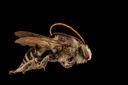
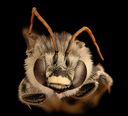
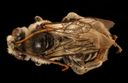
As a Melissodes , possesses the long characteristic of the , particularly pronounced in males. The specific epithet "denticulatus" (meaning small-toothed) suggests distinctive minute tooth-like projections, most likely on the or other mouthpart structures. Detailed morphological descriptions specific to this species are not well documented in available sources.
Habitat
Found in areas supporting ironweed (Vernonia), suggesting open meadows, prairies, and disturbed where this plant grows. The habitat is thus defined by the presence of this specific floral resource rather than general environmental conditions.
Distribution
North America. Specific range boundaries within North America are not well documented in available sources.
Diet
Nectar and pollen, with a documented strong preference for ironweed (Vernonia). The degree of specialization versus opportunistic feeding on other flowers is not established.
Host Associations
- Vernonia - primary floral associateConsistently found around ironweed, which facilitates identification
Life Cycle
As with other Melissodes, females are ground-nesting solitary bees. Males likely exhibit the -typical of sleeping in on vegetation while females nest in underground burrows. Specific details for M. denticulatus are not documented.
Behavior
Males of related Melissodes exhibit territorial and sleeping on stems or flowers; similar behavior is plausible but not confirmed for M. denticulatus specifically.
Ecological Role
, with a documented association with ironweed suggesting potential role in pollination of this plant . Broader functions are not established in available sources.
Similar Taxa
- Other Melissodes speciesShare long-horned ; distinguished by M. denticulatus's specific association with ironweed
- Svastra obliquaRelated long-horned bee with similar male sleeping ; distinguished by -level characters and floral associations
More Details
Identification utility of ironweed association
The Wikipedia source notes that the 'can usually be found around ironweed which makes it easier to identify compared to other species in the Melissodes .' This suggests that floral association is a practical field identification tool for this species.
Sources and further reading
- BugGuide
- Wikipedia
- GBIF taxonomy match
- iNaturalist taxon
- NCBI Taxonomy
- Catalogue of Life
- About Those Sleepovers... | Bug Squad
- The Year 2017: 'Survival of the Flittest' | Bug Squad
- What's Not to Love About 'Boys' Night Out'? | Bug Squad
- 2023: These Are a Few of My Favorite Things | Bug Squad
- Seen Any Monarchs Lately? | Bug Squad
- 'Bee' One in a Million | Bug Squad