
Eucera actuosa
(Cresson, 1879)
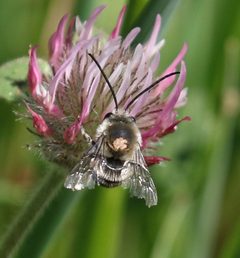
Eucera actuosa is a of long-horned bee in the Apidae. It was described by Cresson in 1879 and is found in North America. As a member of the Eucera, it belongs to a group of solitary bees commonly known as squash bees due to their specialized pollination of cucurbit crops. The species is part of the tribe Eucerini, which is characterized by males with notably long .
Pronunciation
How to pronounce Eucera actuosa: //juːˈsɛrə ækˈtjuːoʊsə//
These audio files are automatically generated. While they are not always 100% accurate, they are a good starting point.
Images
Distribution
North America. GBIF records indicate presence in North America with distribution records specifically noting the region as present.
Similar Taxa
- Eucera longicornisAlso a long-horned bee with males possessing exceptionally long ; however, E. longicornis is found in Europe (UK, southern England and Wales) rather than North America, and has specific associations with the Six-banded Nomad Bee (Nomada sexfasciata)
- Eucera pruinosaAnother North American Eucera , formerly placed in Peponapis, known as an efficient of cucurbits; E. actuosa may share similar ecological preferences but differs in specific distribution and possibly morphological details
More Details
Taxonomic authority note
NCBI lists the authority as (Cresson, 1878), while Catalogue of Life and other sources use (Cresson, 1879). This minor discrepancy in year may reflect different interpretations of publication dates.
Sources and further reading
- BugGuide
- Wikipedia
- GBIF taxonomy match
- iNaturalist taxon
- NCBI Taxonomy
- Catalogue of Life
- ESA Entomology Games Are Both Educational and Entertaining | Bug Squad
- Primary Type List | Entomology Research Museum
- Meloidae Holdings | Entomology Research Museum
- Early Birds? No, Early Butterflies! | Bug Squad
- Wild Pollinators Get the Job Done
- Conservation Volunteering at Prawle Point with Buglife - Buglife Blog - Buglife