
Diadasia diminuta
(Cresson, 1879)
globe mallow bee, globemallow chimney bee
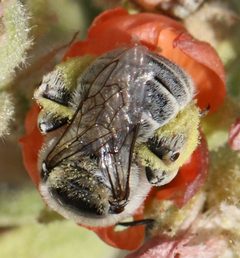
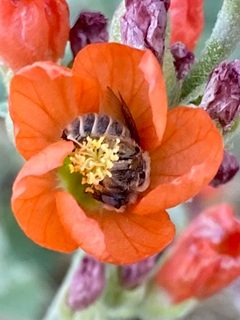
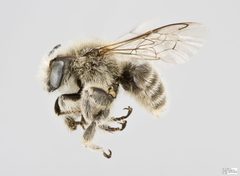
Diadasia diminuta, commonly known as the globe mallow or globemallow chimney bee, is a solitary bee in the Apidae, tribe Emphorini. It is native to North and Central America and is primarily associated with flowers in the Sphaeralcea (globe mallows). The species has been documented exhibiting -switching , utilizing alternative mallow species such as Iliamna latibracteata when its preferred host plants are unavailable. Like other chimney bees, females construct distinctive turret-like nest entrances.
Pronunciation
How to pronounce Diadasia diminuta: //daɪəˈdeɪʒə dɪˈmɪnjuːtə//
These audio files are automatically generated. While they are not always 100% accurate, they are a good starting point.
Identification
Distinguished from other Diadasia by morphological features and geographic distribution. The combination of association with Sphaeralcea flowers, chimney-like nest turrets, and distribution in western North America helps distinguish it from . Precise identification requires examination of diagnostic morphological characters such as wing venation, genitalia, and specific body proportions.
Images
Appearance
Medium-sized solitary with typical apid . As a member of the Emphorini tribe, exhibits morphological adaptations for pollen collection from Malvaceae flowers, including specialized scopal hairs on the hind legs for transporting pollen. Females construct chimney-like turrets at nest entrances, a characteristic feature of the Diadasia.
Habitat
Open including grasslands, prairies, desert scrub, and pinyon-juniper woodlands where plants (Sphaeralcea ) occur. Associated with sandy or well-drained soils suitable for nest excavation. Found in areas with abundant flowering Malvaceae, particularly globe mallows.
Distribution
North America and Central America. Documented from northwestern California and southwestern Oregon northward, throughout the western United States, and extending south into Central America. Records indicate presence in Utah, Arizona, Colorado, New Mexico, Oklahoma, and Texas.
Seasonality
active during warm months when plants are in bloom. Field observations indicate activity from late spring through summer, with peak activity corresponding to Sphaeralcea flowering periods. Specific timing varies by latitude and elevation.
Diet
Oligolectic on Malvaceae, primarily collecting pollen from Sphaeralcea (globe mallows). Documented -switching to Iliamna latibracteata (Malvaceae) in northwestern California and southwestern Oregon when preferred Sphaeralcea hosts are absent. Nectar feeding from host flowers.
Host Associations
- Sphaeralcea - primary pollen globe mallows, primary
- Iliamna latibracteata - alternative pollen used when Sphaeralcea not present; rare mallow in northwestern California and southwestern Oregon
- Heterotheca - flower visitationobserved on flowers, possibly for nectar
- Opuntia - flower visitationobserved on cactus flowers, possibly for nectar
Life Cycle
Solitary with typical apid : females excavate nests in soil, construct chimney-like turrets at entrances, provision with pollen and nectar, and lay . Larvae develop within cells, pupate, and emerge as . Multiple per year possible in warmer climates.
Behavior
Females construct distinctive turret-like nest entrances ("chimneys") from soil and secretions, projecting above ground surface. Exhibits -switching when primary pollen hosts are unavailable. Solitary nesting, though multiple females may nest in favorable areas. Males likely patrol host flowers for mates.
Ecological Role
Important of Malvaceae, particularly Sphaeralcea . Specialized pollen collection relationship with plants. Contributes to plant reproductive success in arid and semi-arid . Provides food source for nest and .
Human Relevance
Native of wildflowers in western North America. No significant agricultural use documented, but contributes to services in natural and semi-natural . Subject of ecological and behavioral research due to specialized plant relationships.
Similar Taxa
- Diadasia australissimilar chimney-nesting and Malvaceae association, but differs in geographic distribution and specific preferences
- Diadasia rinconiscongeneric chimney bee with overlapping range, distinguished by morphological features and plant specificity
- Melissodessimilar size and flower-visiting , but lacks chimney nest turrets and has different pollen collection adaptations
More Details
Taxonomic note
The iNaturalist record treats Diadasia diminuta as a , suggesting potential cryptic diversity or unresolved taxonomic boundaries within this lineage.
Conservation relevance
-switching documentation highlights ecological flexibility that may buffer against host plant rarity or disturbance, though dependence on Malvaceae limits overall ecological versatility.
Sources and further reading
- BugGuide
- Wikipedia
- GBIF taxonomy match
- iNaturalist taxon
- NCBI Taxonomy
- Catalogue of Life
- Eumastacidae | Beetles In The Bush
- Host-switching by a bee where its usual pollen host is not present: Diadasia diminuta (Cresson, 1878) (Apidae: Eucerinae: Emphorini) uses the rare mallow, Iliamna latibracteata Wiggins (Malvaceae), as its pollen host in northwestern California and southwestern Oregon