
Anthophora bomboides
Kirby, 1837
Bumble-bee-mimic anthophora, Bumblebee-like Digger Bee, Stanford bumble bee digger
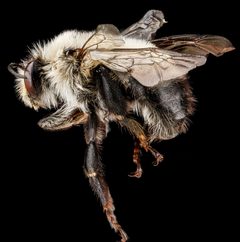
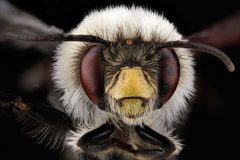
Anthophora bomboides is a solitary ground-nesting native to North America. Females construct distinctive turreted nests in sandy substrates, particularly coastal sand cliffs. The exhibits of bumblebees, specifically resembling Bombus vosnesenskii in coloration. Research has documented unique microbial , with bacteria and fungi proliferating during larval and potentially enhancing survival.
Pronunciation
How to pronounce Anthophora bomboides: /ænˈθɒfərə bɒmˈbɔɪdiːz/
These audio files are automatically generated. While they are not always 100% accurate, they are a good starting point.
Identification
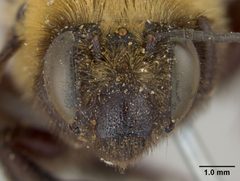
Distinguished from true bumblebees (Bombus) by solitary , ground-nesting habit, and lack of corbiculae. Females rarely sting and are not defensive, unlike female bumblebees. The A. b. stanfordiana is specifically associated with coastal sand cliffs and constructs visible turreted nest entrances.
Images
Habitat
Coastal and inland sandy areas, particularly sand cliffs and dunes. Documented nesting sites include Bodega and Point Reyes in California. Requires access to water sources for nest construction and suitable substrate for excavation.
Distribution
North America. Documented in California (Sonoma County, Bodega Bay, Point Reyes), Oregon, and Vermont. The A. b. stanfordiana occurs along the Pacific Coast from northern California to Oregon.
Seasonality
Active in spring and summer. Females construct nests in spring following mating. Larvae enter (dormancy) during fall and winter, with in subsequent spring.
Diet
forage for nectar and pollen. Documented floral visits include wild radish and lupine. Pollen provisions stored in for larval consumption.
Life Cycle
Solitary ground-nesting . Females excavate nest burrows in sand, constructing turrets at entrances. Nests provisioned with pollen balls. Larvae develop through summer, enter during fall and winter, and complete development to emerge as the following spring. occurs in the larval stage.
Behavior
Females collect water from nearby sources, transporting it in the crop to soften sand for excavation—documented up to 80 daily trips. Nest construction produces distinctive turret structures at burrow entrances. Males patrol nesting areas. Exhibits of bumblebees, gaining protection from through resemblance to more dangerous .
Ecological Role
of wildflowers including wild radish and lupine. to unique microbial including Streptomyces bacteria that inhibit growth. Also host to the Bursaphelenchus seani. Contributes to coastal dune dynamics through nesting activity.
Human Relevance
Subject of research on -microbe interactions and solitary . Featured in educational media including KQED Deep Look video "This Bee Builds Sandcastles at the Beach." name "stanfordiana" commemorates 1904 Stanford University specimen collection. at Bodega serve as long-term study site for UC Davis researchers.
Similar Taxa
- Bombus vosnesenskiiThe yellow-faced bumble bee that A. bomboides mimics in coloration; distinguished by social colony , corbiculae, and defensive stinging.
- Habropoda miserabilisAnother digger bee found in similar coastal sand dune ; lacks bumblebee mimicry and has different coloration.
More Details
Microbial Symbiosis
Research by Christensen et al. documented that diapausing larvae abundant symbiotic bacteria (including Streptomyces) and fungi, contrary to assumptions that insects void microbial . These microbes may protect against and cold stress.
Subspecies
Two recognized : A. b. bomboides and A. b. neomexicana. The studied at Bodega is A. b. stanfordiana, though this name's taxonomic status requires verification against current .
Sources and further reading
- BugGuide
- Wikipedia
- GBIF taxonomy match
- iNaturalist taxon
- NCBI Taxonomy
- Catalogue of Life
- Digging the Digger Bees and the Newly Published Research | Bug Squad
- Congratulations, Microbiologist Shawn Christensen: Best Dissertation | Bug Squad
- UC Davis: All A'Buzz With Bee Nests and Art | Bug Squad
- The Beckoning Bees at Bodega Bay | Bug Squad
- A Silver Digger Bee in Flight at Bodega Head | Bug Squad
- The Glory of the Bindweed Turret Bees | Bug Squad