
Pseudopanurgus albitarsis
(Cresson, 1872)
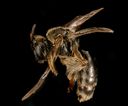
Pseudopanurgus albitarsis is a solitary in the Andrenidae, Panurginae. It occurs in Central and North America. Like other members of its , it is a ground-nesting bee. The specific epithet "albitarsis" refers to pale or whitish on the legs.
Pronunciation
How to pronounce Pseudopanurgus albitarsis: //ˌsjuː.doʊ.pəˈnjʊr.ɡəs ˌæl.baɪˈtɑr.sɪs//
These audio files are automatically generated. While they are not always 100% accurate, they are a good starting point.
Identification
Identification to level requires examination of microscopic morphological features, particularly of the male genitalia and other structural characters used in Andrenidae . The pale may provide a field clue, but confirmation requires keys for Pseudopanurgus. Distinguished from other Andrenidae by combination of Panurginae tribal characters (Protandrenini) and -level features of Pseudopanurgus.
Images
Distribution
Central America and North America. Specific country records are not detailed in available sources, but the is broadly distributed in these regions.
Ecological Role
As a solitary ground-nesting , likely contributes to pollination of wildflowers in its . Specific plant associations are not documented.
Similar Taxa
- Other Pseudopanurgus speciesCongeneric share the same general body plan and require detailed morphological examination for separation; many are poorly described.
- Other Protandrenini (e.g., Protandrena)Same tribe in Panurginae; separation requires examination of wing venation, facial foveae presence/absence, and other structural characters.
More Details
Taxonomic note
The Pseudopanurgus is part of the tribe Protandrenini in Panurginae. This group of bees is relatively understudied, and many are known from limited material. The species was described by Cresson in 1872, but modern redescriptions may be lacking.
Nomenclature
The specific epithet "albitarsis" combines Latin "albi-" (white) and "tarsis" (), referring to the leg segments.