
Pseudopanurgus
Cockerell, 1897
mining bees
Species Guides
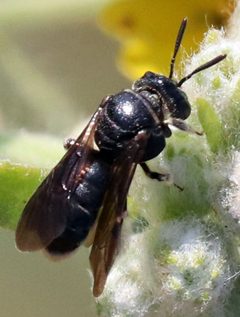
9Pseudopanurgus is a of mining bees in the Andrenidae, established by Cockerell in 1897. The genus contains at least 32 described , though some sources suggest over 130. These bees are small, ranging from 3 mm to 10 mm in body length. Their taxonomic status has been debated, with some treatments recognizing them as a subgenus of Protandrena.
Pronunciation
How to pronounce Pseudopanurgus: /ˌsjuːdəˈpænɜːɡəs/
These audio files are automatically generated. While they are not always 100% accurate, they are a good starting point.
Identification
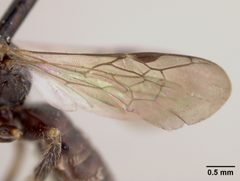
Pseudopanurgus bees can be distinguished by having two submarginal in the forewing, a characteristic wing venation trait. Body size ranges from 3 mm to 10 mm. The is closely related to Protandrena, and definitive separation often requires examination of genitalia and other microscopic characters.
Images
Distribution
Records indicate presence in the United States, specifically including Vermont. The is primarily Nearctic in distribution.
Ecological Role
As mining bees, members of this are solitary ground-nesting that contribute to pollination services.
Similar Taxa
- ProtandrenaClosely related ; Pseudopanurgus has been treated as a subgenus of Protandrena in some taxonomic treatments, requiring careful morphological examination to distinguish.
More Details
Taxonomic Uncertainty
The rank of Pseudopanurgus remains unsettled in the literature. Catalogue of Life and GBIF recognize it as a valid , while iNaturalist and some treatments classify it as the subgenus Protandrena (Pseudopanurgus). counts vary dramatically between sources (32 vs. 130+), reflecting ongoing taxonomic revision.