
Calliopsis nebraskensis
Crawford, 1902
Nebraska calliopsis
Calliopsis nebraskensis, the Nebraska calliopsis, is a small mining bee in the Andrenidae. It is a ground-nesting solitary native to North America. The was described by Crawford in 1902. Like other members of the Calliopsis, it likely nests in sandy or loose soils.
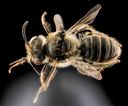

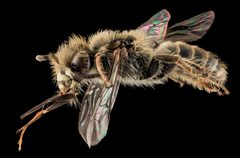
Pronunciation
How to pronounce Calliopsis nebraskensis: /kæˈlaɪ.əp.sɪs nɛˌbrəˈskɛn.sɪs/
These audio files are automatically generated. While they are not always 100% accurate, they are a good starting point.
Identification
Most Calliopsis are very small bees. Males of related species such as Calliopsis zebrata have been observed flying relentlessly over nesting areas, landing only briefly. Specific diagnostic features for C. nebraskensis are not documented in available sources.
Images
Habitat
The Calliopsis is associated with sandy or loose soils suitable for ground nesting. Related occur in shortgrass prairie and plains .
Distribution
North America. Specific range details beyond this continental distribution are not documented in available sources.
Life Cycle
As a member of Andrenidae, this is solitary. Females construct individual burrows in soil for nesting. Developmental details specific to this species are not documented.
Ecological Role
As a mining bee, it likely contributes to pollination of native flora in its . Members of this have been observed visiting flowers of White Prairie Clover (Dalea candida) in Colorado shortgrass prairie.
Similar Taxa
- Calliopsis zebrataCongeneric with similar size and preferences; males of C. zebrata are noted for their relatively large size compared to other Calliopsis and their persistent hovering over nesting sites
- Other AndrenidaeMining bees in Andrenidae share ground-nesting and solitary lifestyle, requiring examination of morphological details for separation
More Details
Taxonomic note
The specific epithet 'nebraskensis' indicates a connection to Nebraska, though this may reflect the type locality rather than restricted distribution. The was described by R. C. Crawford in 1902.