
Andrena rehni
Viereck, 1907
Rehn's Miner Bee
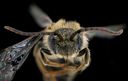
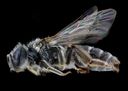
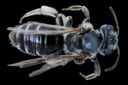
Andrena rehni is a solitary, ground-nesting miner native to eastern North America. The is oligolectic, specializing on pollen from Castanea species including American chestnut and Allegheny chinkapin. Following the functional extinction of American chestnut due to chestnut blight, the bee became increasingly rare and was not documented for nearly a century until its rediscovery in 2018. It has since been recorded in multiple states after long absences.
Pronunciation
How to pronounce Andrena rehni: /ænˈdreɪnə rɛni/
These audio files are automatically generated. While they are not always 100% accurate, they are a good starting point.
Identification
Specific identification details for Andrena rehni are not documented in available sources. As a member of the Andrena, it likely shares general miner including a velvety and scopa (pollen-carrying hairs) on the hind legs of females. Distinguishing features from other Andrena would require examination of microscopic characters.
Images
Habitat
Associated with forested areas where Castanea occur. Nests in underground burrows in soil. Rediscovery occurred on Allegheny chinkapin in Maryland, and subsequent records include transgenic American chestnut orchards and forest openings with young chestnut trees.
Distribution
Eastern North America. Documented from Maryland (2018 rediscovery), Connecticut (2019), Massachusetts (2020), New York (2023, after 119-year absence), and additional states. Historical range coincided with American chestnut distribution along the Appalachian Mountains.
Seasonality
Active from late June to late July, coinciding with the flowering period of American chestnut. All New York survey records were of females foraging for pollen on newly maturing chestnut catkins.
Diet
Oligolectic pollen on Castanea . Females collect pollen from chestnut blossoms; nectar collection has not been documented.
Host Associations
- Castanea dentata - primary pollen American chestnut, now functionally extinct in former range due to chestnut blight
- Castanea pumila - pollen Allegheny chinkapin, site of 2018 rediscovery in Maryland
- Castanea - pollen Including transgenic American chestnut varieties
Life Cycle
Solitary ground-nesting . Females excavate underground nests and provision with pollen. Active life stage coincides with brief chestnut flowering window; larvae develop in nests with pollen provisions.
Behavior
Females forage specifically for pollen rather than nectar. Nesting occurs in or solitary burrows in bare or sparsely vegetated soil.
Ecological Role
of Castanea . Prior to rediscovery, the American chestnut was believed to be wind-pollinated; presence of A. rehni demonstrates insect pollination role.
Human Relevance
Conservation concern due to association with functionally extinct tree. Listed as of special conservation status in Connecticut and high priority species of greatest conservation need by New York State Department of Environmental Conservation. Rediscovery prompted revised understanding of chestnut pollination .
Similar Taxa
- Other Andrena speciesMany Andrena are or oligolectic on other plant ; A. rehni distinguished by Castanea specialization and matching late June-July chestnut bloom
More Details
Conservation history
Not documented for nearly a century until 2018 rediscovery by Sam Droege of USGS. Prior to rediscovery, last New York record was July 3, 1904 from Orange County.
Nomenclature
Specific epithet honors James A. G. Rehn. Described by Henry Lorenz Viereck in 1907.
Sources and further reading
- BugGuide
- Wikipedia
- GBIF taxonomy match
- iNaturalist taxon
- Catalogue of Life
- Not-so Solitary Bees - Buglife Blog - Buglife
- Northern Ireland, invertebrate finds in review 2023 - Buglife Blog - Buglife
- In a New Study, Spring Forest Bees Get Their Due
- Bare ground experiments to help save rare bees and wasps - Buglife Blog - Buglife
- What’s in a name….? - Buglife Blog - Buglife
- Bees of the Changing Chalk Partnership Area - Buglife Blog - Buglife