
Andrena fragilis
Smith, 1853
Fragile Miner Bee, Fragile Dogwood Andrena
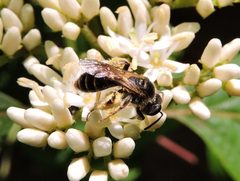
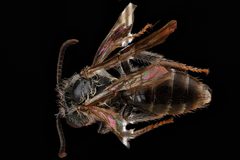
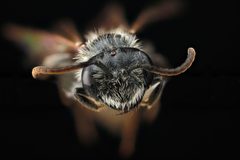
Andrena fragilis is a solitary mining bee in the Andrenidae. It is native to North America, with confirmed records from the northeastern United States including Vermont. The belongs to a large of ground-nesting bees that excavate tunnels in soil to provision their larvae with pollen. Like other Andrena species, it is active in spring and contributes to pollination of early-flowering plants.
Pronunciation
How to pronounce Andrena fragilis: /ænˈdriːnə ˈfrædʒɪlɪs/
These audio files are automatically generated. While they are not always 100% accurate, they are a good starting point.
Images
Habitat
Distribution
North America; specifically recorded from Vermont, United States. Distribution appears limited based on available observation data.
Seasonality
Spring-active , consistent with the Andrena which primarily flies during spring months.
Host Associations
- Cornus - pollen source 'fragile dogwood andrena' suggests association with dogwood (Cornus) for pollen collection
Life Cycle
Solitary with ground-nesting : females excavate tunnels in soil, provision individual with pollen and nectar, lay , and seal cells. Larvae develop underground, pupate, and emerge as the following spring. No ; each female independently provisions her own nest.
Behavior
Females nest solitarily but may aggregate in suitable patches. Males typically emerge before females and patrol nesting areas seeking mates. Nesting involves digging vertical or angled burrows with lateral .
Ecological Role
of spring-flowering plants, likely including dogwood (Cornus) based on . Contributes to function through pollen transfer and as prey/ for parasitic bees and other insects.
Human Relevance
Similar Taxa
- Other Andrena speciesAndrena is a large with many morphologically similar spring-active mining bees; precise identification requires examination of microscopic characters such as facial foveae, propodeal sculpturing, and genitalia
More Details
Conservation context
Ground-nesting solitary bees like A. fragilis are increasingly recognized as requiring specific management. Research on related shows that bare ground creation through mechanical disturbance or conservation grazing can significantly improve nesting opportunities for mining bees.
Sources and further reading
- BugGuide
- Wikipedia
- GBIF taxonomy match
- iNaturalist taxon
- NCBI Taxonomy
- Catalogue of Life
- Not-so Solitary Bees - Buglife Blog - Buglife
- Northern Ireland, invertebrate finds in review 2023 - Buglife Blog - Buglife
- In a New Study, Spring Forest Bees Get Their Due
- Bare ground experiments to help save rare bees and wasps - Buglife Blog - Buglife
- What’s in a name….? - Buglife Blog - Buglife
- Bees of the Changing Chalk Partnership Area - Buglife Blog - Buglife