
Eucalymnatus tessellatus
(Signoret, 1873)
Tessellated scale, Palm scale
Eucalymnatus tessellatus, commonly known as the tessellated scale or palm , is a soft scale insect ( Coccidae) native to South America. First described by Signoret in 1873 from specimens collected on a palm in France, this has been disseminated worldwide through human activity on cultivated . It is recognized as a pest in greenhouses, commercial nurseries, and landscapes—particularly in subtropical regions such as south Florida. The species belongs to a containing 17 species, most of which are neotropical in origin.
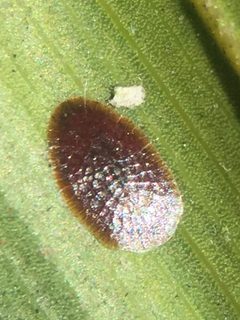
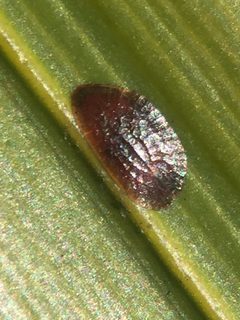
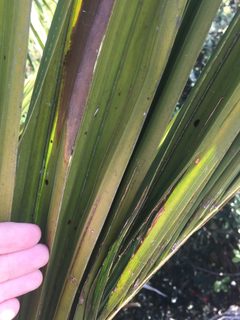
Pronunciation
How to pronounce Eucalymnatus tessellatus: //juː.kəˈlɪm.nə.təs ˌtɛs.əˈleɪ.təs//
These audio files are automatically generated. While they are not always 100% accurate, they are a good starting point.
Images
Habitat
Greenhouses, commercial nurseries, and subtropical landscapes. In its introduced range, it occurs primarily in managed environments associated with cultivated plants.
Distribution
Native to South America; now due to human-mediated on cultivated . Documented occurrences include: United States (south Florida), Indonesia, Spain, Russia, Saint Croix, Seychelles, Solomon Islands, South Korea, South Africa, Reunion, Puerto Rico, Poland, Papua New Guinea, Palau, Norfolk Island, Sri Lanka, Morocco, United Kingdom, New Caledonia, Ukraine, Madeira Islands, Mexico, Zanzibar, Western Samoa, Vietnam, Venezuela, U.S. Virgin Islands, Sweden, Tuvalu, Turkey, Tonga, Thailand, Tanzania, Taiwan, Vanuatu, Cape Verde, Egypt, Dominican Republic, Denmark, Cuba, Cook Islands, Comoros, Federated States of Micronesia, China, Argentina, Canary Islands, Brazil, Bonin Islands, Bermuda, Australia, Algeria, Mauritius, Colombia, Jamaica, Madagascar, Kiribati, Fiji, Japan, Malaysia, Italy, India, Hawaiian Islands, Guyana, Germany, Georgia, French Polynesia, France, and Kenya.
Host Associations
- Caryota ursus - Original description from this palm
- Cultivated hosts - Primary for global ; specific plants not detailed in available sources
Ecological Role
Recognized as an agricultural and horticultural pest causing general plant damage. Specific ecological functions in native are not documented in available sources.
Human Relevance
Economic pest in greenhouse production, commercial nurseries, and landscape maintenance. Management strategies are referenced in extension literature but not detailed in available sources.
Sources and further reading
- BugGuide
- GBIF taxonomy match
- iNaturalist taxon
- NCBI Taxonomy
- Catalogue of Life
- Coccinelidae | Beetles In The Bush
- These Insect Costume Designers are Dressed to Impress
- Missouri | Beetles In The Bush | Page 2
- Tessellated Scale Eucalymnatus tessellatus (Signoret)
- Tessellated Scale, Ecualymnatus tessellatus (Signoret) (Insecta: Homoptera: Coccidae)